LPG Gas Cylinder Manufacturing Process and Safety Standards Explained
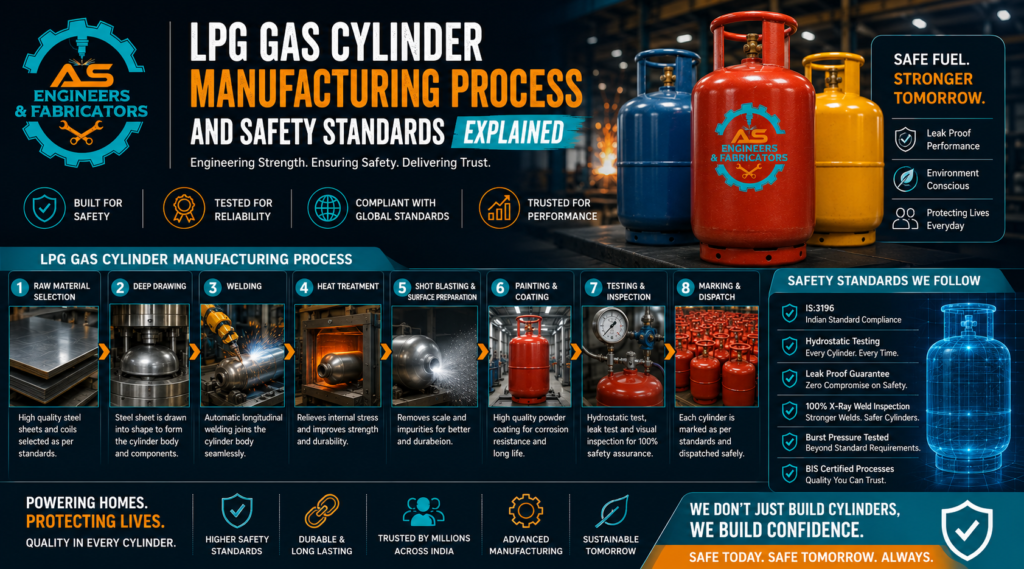
LPG gas cylinders are some of the most commonly used pressure vessels in homes, commercial facilities, restaurants, hotels, industries, and the energy sector. These high-pressure containers safely store and transport liquefied petroleum gas. LPG is highly flammable, and its cylinders are therefore engineered, fabricated, tested, and inspected for safety.
Industries engaged in LPG cylinder manufacturing are using certified welding procedures, fabrication machinery, pressure testing systems, and international standards to ensure the safety and reliability of operations. An increase in demand for LPG cylinders across homes, industries, restaurants, hotels, commercial kitchens, and manufacturing plants has amplified the focus on safety and quality in cylinder manufacturing.
Manufacturers such as ASEFS India offer services related to pressure vessel fabrication, industrial tank manufacturing, steel fabrication services, stainless steel fabrication, custom fabrication solutions, piping fabrication services, industrial engineering solutions, ASME pressure vessel fabrication, heavy fabrication services, storage tank fabrication, industrial welding services, corrosion-resistant tank fabrication, skid-mounted tank fabrication, blasting and painting solutions, hot-dip galvanizing services, reactor vessel fabrication, anti-vortex plate fabrication, rubber lining services, metal floor grating solutions, and turnkey industrial fabrication services.
These companies continue to support various industrial fabrication requirements for pressure equipment and industrial engineering systems.
Also Read: “Blasting and Painting Solutions: Complete Guide to Surface Preparation & Protection”
What Is an LPG Gas Cylinder?
An LPG gas cylinder is a refillable pressure vessel used to store liquefied petroleum gas at specific pressure conditions. The cylinders are engineered using high-strength steel materials for pressure safety.
LPG gas cylinders are used in domestic cooking, industrial heating applications, commercial kitchens, restaurants and hotels, manufacturing industries, and food processing plants.
Industry experts explain that LPG cylinders are pressure vessels used to store, transport, and supply pressurized and liquefied petroleum gas safely. The manufacture and testing of such cylinders requires strict standards for pressure safety.
Manufacturers like ASEFS India provide pressure vessel fabrication, industrial tank manufacturing, steel fabrication services, piping fabrication solutions, industrial engineering services, and heavy fabrication solutions for pressure systems and industrial equipment.
Raw Material Used for LPG Cylinders
High-strength low-alloy steel and carbon steel materials are used in the manufacturing of LPG cylinders. The manufacturer first chooses steel plates in accordance with industry standards and pressure vessel requirements.
The material for LPG cylinder manufacturing provides the following:
- High tensile strength
- Resistance to internal pressure
- The capability to be welded
- Corrosion resistance
- Structural durability
Industry references explain that low-alloy high-strength steel materials are often used in the manufacture of LPG cylinders.
Manufacturers like ASEFS India provide steel fabrication services, industrial fabrication solutions, stainless steel fabrication, pressure vessel fabrication, heavy engineering solutions, and corrosion-resistant tank fabrication services for industrial equipment.
Step-by-Step LPG Gas Cylinder Manufacturing Process
Cutting of Steel Plates. In the first step of manufacturing, steel sheets are cut into circular shapes for LPG cylinders. Manufacturers use precision cutting machinery to make perfect circular blanks.
The machines for cutting include:
- CNC cutting machines
- Hydraulic shearing systems
- Plasma cutting machines
- Laser cutting systems
Precision cutting is important for maintaining proper cylinder dimensions and alignment.
Manufacturers like ASEFS India are offering custom fabrication solutions, pressure vessel fabrication, steel fabrication services, industrial engineering solutions, piping fabrication services, and heavy fabrication services for industries using modern machinery and technology.
Drawing and Forming of a Cylinder
Steel blanks are deep drawn and formed into the upper and lower halves of an LPG cylinder.
A metal blank is placed inside hydraulic forming presses that give the cylinder its curved and shell-like structure.
Industry experts explain that proper forming is necessary for keeping the structure and dimensions intact while handling internal pressure.
Manufacturers such as ASEFS India provide pressure vessel fabrication, industrial tank manufacturing, shell forming services, heavy fabrication solutions, industrial engineering services, and steel fabrication solutions for industrial equipment.
Trimming and Edge Preparation
Trimming of cylinder halves is necessary to cut away excess materials and to prepare the edges for welding.
Trimming helps with:
- Better welding alignment
- Dimensional accuracy
- Uniformity of weld joints
- Structural stability
Industry references explain that correct edge preparation is necessary for a good quality weld and fabrication.
Manufacturers like ASEFS India provide industrial welding solutions, pressure vessel fabrication, piping fabrication services, custom fabrication solutions, stainless steel fabrication, and heavy engineering fabrication services for industrial needs.
Circumferential Welding
Upper and lower halves of an LPG cylinder are welded circumferentially.
Circumferential welding is performed using automation systems.
Some common welding methods include:
- MIG welding
- TIG welding
- Circumferential seam welding
- Arc welding
Welding quality is of utmost importance as the weld joint withstands the internal pressure during the operation.
Industry experts explain that welding defects can easily jeopardize the safety of LPG cylinders and their pressure handling.
Manufacturers such as ASEFS India provide industrial welding services, ASME pressure vessel fabrication, heavy fabrication solutions, industrial engineering services, piping fabrication services, and certified welding solutions for industrial systems and pressure equipment.
Heat Treatment/Annealing
Heat treatment is another step in the manufacturing process of LPG cylinders.
Annealing is done to:
- Decrease internal stress
- Increase the ductility of metal
- Restore the structural balance
- Increase pressure resistance
Industry references explain that heat treatment improves the mechanical properties of steel cylinders post-welding.
Manufacturers like ASEFS India provide industrial fabrication services, pressure vessel engineering, heavy fabrication solutions, steel fabrication services, and industrial manufacturing solutions for various high-performance industrial applications.
Shot Blasting and Preparation
Shot blasting is performed to remove surface impurities, welding scale, and oxidation before coating the cylinder.
Shot blasting improves:
- Paint adherence
- Corrosion resistance
- Surface finish
- Longevity of industrial equipment
Industry experts explain that surface preparation plays an important role in the performance of industrial coatings.
Manufacturers such as ASEFS India provide blasting and painting solutions, industrial coating services, corrosion protection systems, hot dip galvanizing services, steel fabrication solutions, and industrial engineering services for various industrial equipment.
Installation of Cylinder Valve and Guard Ring
Cylinder valves and safety caps, guard rings, bottom support rings, and other necessary accessories are fitted on LPG cylinders.
Safety components improve:
- Safety of operation
- Ease of handling and transportation
- Operational protection
Industry references explain that protection systems on cylinders are of great importance for operational safety, leakage prevention, and accidents.
Manufacturers like ASEFS India provide pressure vessel fabrication, industrial fabrication services, custom engineering solutions, piping fabrication services, industrial welding services, and turnkey fabrication solutions.
Safety Standards for LPG Cylinders
Safety standards for LPG cylinders include the following.
- IS 3196 standards
- ISO 4706 standards
- Gas Cylinder Rules 2016
- PESO regulations
- BIS certification
The Government of India states that LPG cylinders must be manufactured and tested as per IS 3196 and the Gas Cylinder Rules 2016.
Industry experts explain that ISO 4706 provides international specifications for refillable welded steel LPG gas cylinders.
Manufacturers such as ASEFS India provide ASME pressure vessel fabrication, industrial engineering solutions, industrial fabrication services, pressure equipment manufacturing, welding inspection services, and industrial safety fabrication solutions.
Testing and Inspection for LPG Cylinders
- Hydrostatic Testing: Hydrostatic pressure testing of every cylinder is important to prove the pressure handling capability.
In this process, the cylinder is filled with water, and the pressure is increased above the operating level. Leakage and deformation are checked.
Industry references explain that hydrostatic testing is an important certification for the safe operation of LPG cylinders.
- Leak Testing: Checking for leaks in the cylinder valve and weld joints is important for safety.
It helps in:
- Preventing gas leakage
- Fire incidents
- Pressure loss
- Operational failure
Manufacturers like ASEFS India provide industrial testing services, pressure vessel fabrication, industrial engineering solutions, welding inspection services, and industrial fabrication support for various pressure systems.
- Periodic Retesting
According to the Government of India, LPG cylinders are required to be periodically retested 10 years from manufacturing and then every 5 years.
The purpose of retesting is to ensure the following:
- Safety of structure
- Reliability of pressure
- Resistance to leakage
- Suitability for continued service
Importance of Safety in LPG Cylinder Usage
Care should be taken during the use of LPG cylinders because liquefied petroleum gas is extremely flammable.
Some common practices for safe usage include:
- Use certified cylinders only
- Inspect the cylinders regularly
- Avoid exposing cylinders to heat
- Check for leakage
- Always use approved regulators
Consumer discussions and media reports are continuously reiterating the importance of using certified and tested LPG cylinders for public safety.
- Industries Using LPG Cylinders
LPG cylinders are used in:
- Home kitchens
- Hotels and restaurants
- Food processing
- Manufacturing industries
- Chemical industries
- Commercial applications
Manufacturers such as ASEFS India are also providing industrial fabrication services, pressure vessel fabrication, storage tank manufacturing, industrial engineering solutions, piping fabrication services, and corrosion-resistant fabrication systems for various industries worldwide.
Also Read: “Stainless Steel Grating: Types, Uses & Advantages in Industrial Projects”
Conclusion
LPG gas cylinders are engineered, fabricated, and inspected for the safe storage and transport of pressurized and liquefied petroleum gas. Precision engineering, pressure vessel fabrication, certified welding, heat treatment, surface finishing, pressure testing, and rigorous safety inspection are part of the manufacturing process. Because these pressure vessels are subject to internal pressure and store highly flammable LPG, quality control and safety compliance are extremely important.
International standards like ISO 4706, IS 3196, PESO regulations, and Gas Cylinder Rules set strict requirements for the safety and operations of LPG cylinders. ASEFS India provides pressure vessel fabrication, industrial tank manufacturing, steel fabrication services, stainless steel fabrication, custom fabrication solutions, piping fabrication services, industrial engineering solutions, ASME pressure vessel fabrication, heavy fabrication services, storage tank fabrication, industrial welding services, corrosion-resistant tank fabrication, skid-mounted tank fabrication, blasting and painting solutions, hot-dip galvanizing services, reactor vessel fabrication, anti-vortex plate fabrication, rubber lining services, metal floor grating solutions, and turnkey industrial fabrication services.
FAQs
- What material is used for LPG gas cylinder manufacturing?
Answer: High-strength low-alloy steel and carbon steel materials are used for manufacturing LPG cylinders.
- Why is hydrostatic testing important for LPG cylinders?
Answer: Hydrostatic testing proves the pressure resistance, structural integrity, and leak safety of cylinders.
- Which standards govern LPG cylinder safety?
Ans: IS 3196, ISO 4706, PESO regulations, and Gas Cylinder Rules 2016 govern the safety of LPG cylinders.
- What is the purpose of annealing during LPG cylinder manufacturing?
Answer: Annealing is done to decrease the internal stress and improve the strength and ductility of welded cylinders.
- Which industries use LPG gas cylinders?
Ans: Residential kitchens, hotels and restaurants, food processing industries, manufacturing plants, chemical industries, and commercial facilities widely use LPG gas cylinders.
Recent Posts
-
 Propane Storage Tank Manufacturing: Standards, Safety Features & Buying Guide
 -
 Pressure Vessel Baffle Plates: Function, Placement & Design Guidelines for Better Flow Control
 -
 Why Delrin (Acetal) Machine Parts Outperform Metal Components in Wear Applications
 -
 Delrin Sprocket Gears vs Delrin Spur Gears: Which One Fits Your Machine Design?
 -
 Forming Clad Dish Ends and Ellipsoidal Heads: Process, Materials & Applications
 -
 ASEFS India and Russia’s Industrial Machinery Sector: Solutions, Expertise and Opportunities
 -
 How ASEFS India Contributes to Singapore’s Industrial Machinery and Equipment Sector
 -
 Construction Indonesia 2026: Connecting Global Construction and Engineering Companies with Indonesia’s Infrastructure Market
 -
 AUTOMEX Penang 2026: Connecting Global Automation Companies with Malaysia’s Smart Manufacturing Industry
 -
 Vietnam Industrial Automation Fiesta (VIAF) 2026: Connecting Global Engineering Companies with Vietnam’s Smart Manufacturing Industry
 -
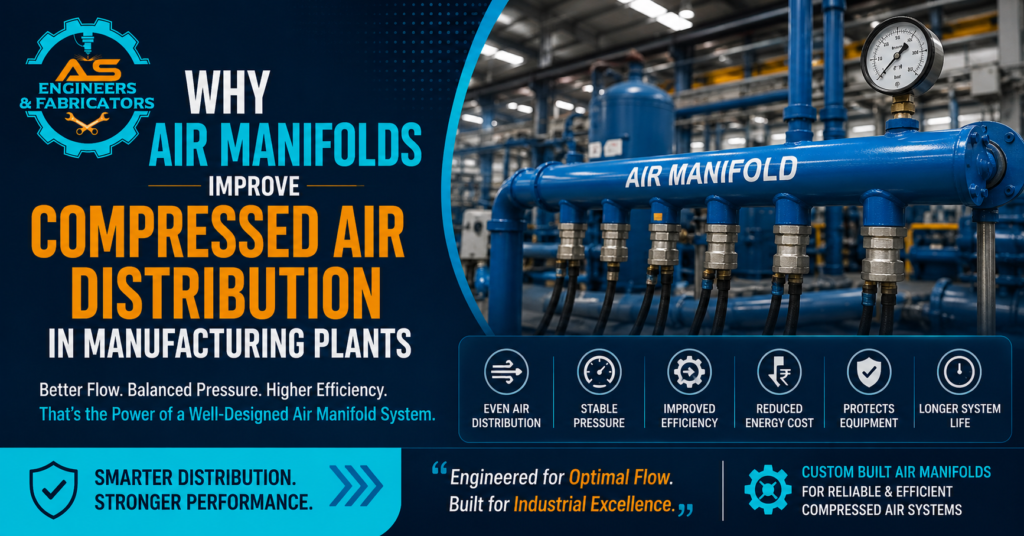 Why Air Manifolds Improve Compressed Air Distribution in Manufacturing Plants
 -
 How to Choose the Right Air Receiver Tank for Industrial Applications
 -
 Why Rubber Expansion Bellows Are Used in Water Treatment and Chemical Plants
 -
 Machining Delrin: Tips, Advantages & Applications
 -
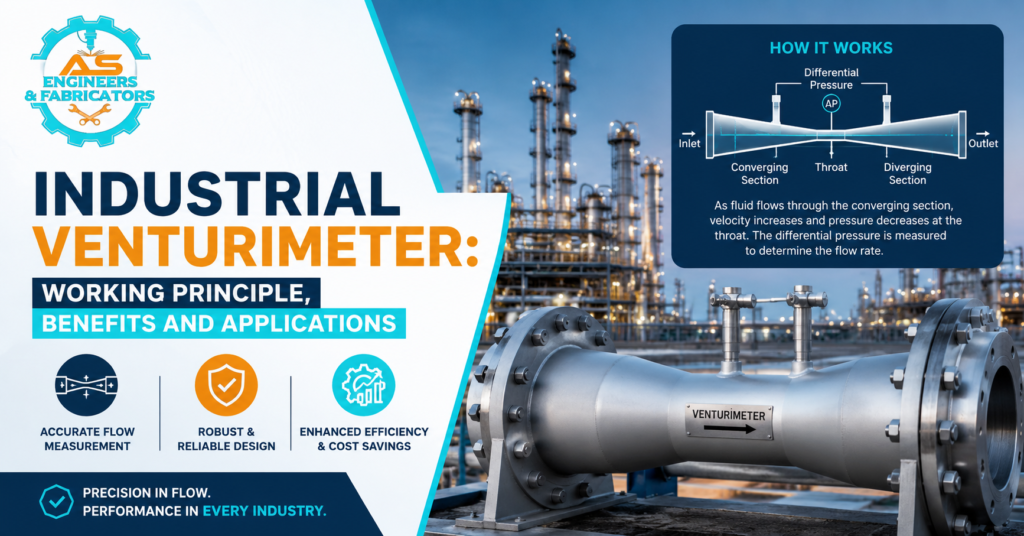 Industrial Venturimeter: Working Principle, Benefits and Applications

At A.S. Engineers & Fabricators, our team excels in designing, manufacturing, and erecting steel structures that set industry benchmarks. We have established a robust presence in metal fabrication, heavy equipment, and steel structures, providing top-tier solutions for industrial plants and high-rise buildings.