How to Import Industrial Products from India – Step-by-Step Guide
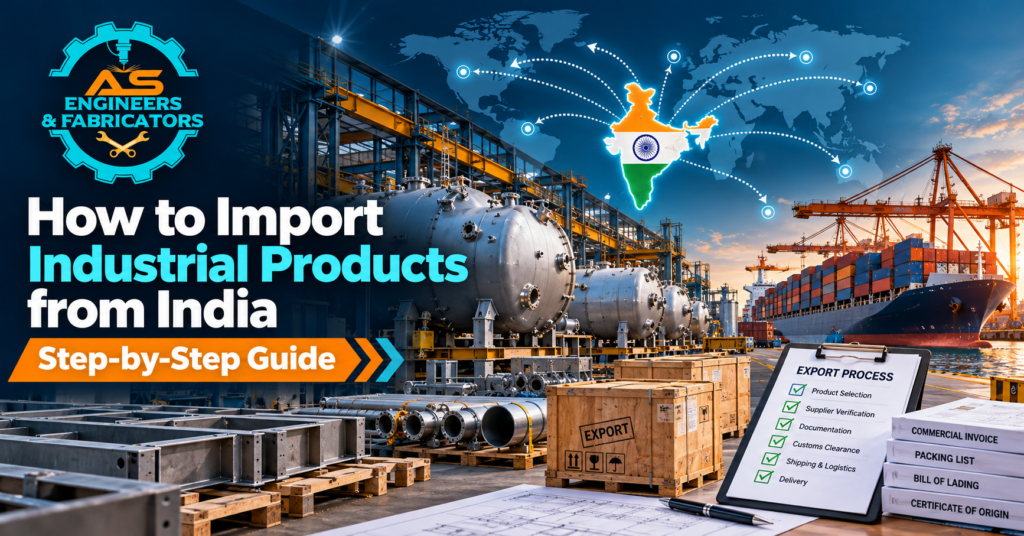
Importing industrial products from India starts with a clear specification and ends with accepted equipment at your destination. By A.S. Engineers & Fabricators Technical Team | Ambernath MIDC, Maharashtra, buyers need to coordinate supplier selection, manufacturing, payment, transport, and customs documentation across these stages.
A quote is not the whole deal. The buyer and supplier should agree what is to be manufactured, how quality will be verified, where delivery takes place, and what documents accompany the shipment.
This guide deals with the process of sourcing industrial equipment, fabricated components, and machinery parts from India for overseas buyers. The exact import registrations, duties, and approvals depend on the destination country and the product.
A. S. Engineers & Fabricators (ASEFS India), Ambernath MIDC, Maharashtra, is an engineering and fabrication company. It has a published scope of pressure vessels, water treatment, industrial tanks, dish ends , structural fabrication and associated services, together with an international export offering.
Also Read: Propane Storage Tank Manufacturing: Standards, Safety Features & Buying Guide
What type of industrial products can be purchased from India?
Enquiries for industrial supplies can be for standard components, replacement parts, or equipment built to project drawings.
For ASEFS India enquiries, the applicable published product and service categories are:
Pressure vessels and industrial storage tanks.
Industrial dish ends.
Heavy structural fabrication and PEB structures.
Steel plant equipment.
rubber-lined tank and components.
Fabricated spares and machinery components.
Each category has its own specification. Buying a replacement spacer is a different type of procurement activity than importing a pressure vessel or a large steel structure.
The following steps provide a framework for both, with the inspection and documentation scaled to the order.
Step 1: Define the Product and Its Intended Use
Begin with a technical inquiry that provides the manufacturer with sufficient information to evaluate the requirement.
Revision to drawing, quantity, size, material grade, tolerance, and required surface finish. Process equipment: design conditions, process medium and relevant construction requirements.
Definition of scope of supply
Please indicate whether you require a component, an assembled item or a complete equipment package. Decide on accessories, fasteners, spares and documentation to be included.
For example, an inquiry to an industrial tank manufacturer should state whether the order includes supports, nozzles, internal fittings, lining and site installation.
A clear scope makes it easier to compare quotations and lessens assumptions in production.
Step 2: Check If You Can Import In Your Country
Determine who will be the importer of record and what is required by the destination country before placing the order.
Contact the customs authority of your destination or your designated customs broker:
Business or customs registration requirements.
Applicable import licences or permits.
Product-specific technical or conformity requirements.
Restrictions affecting the goods, end use or parties.
Documents needed before shipment or arrival.
For example, the UK government’s import process deals with business readiness, commodity classification, valuation and customs declarations separately. Other markets have their own procedures.
Indian and destination registrations are separate.
The India Importer-Exporter Code, or IEC, is linked with the import and export system of India. It does not replace the overseas buyer’s destination-country registration. Indian exports of goods normally require an IEC unless exempted.
Step 3: Find and Confirm the Indian Supplier
Select an industrial equipment manufacturer with the capabilities to produce the product.
Ask for the legal business name, manufacturing address, relevant experience, and identity of the entity issuing the quotation. Determine whether you are dealing with the manufacturer, a merchant exporter, or a supply partner.
Ask for the IEC details and verify them through DGFT’s official services. Verifying the IEC is important, as it helps in confirming the identity of the person; it does not verify the manufacturing quality or creditworthiness.
Technical capability validation
Review drawings, sample inspection records and project experience for custom-made solutions. Arrange a factory visit, video review or independent assessment as appropriate.
If you need a certification, check the scope, the issuer and the validity – not just a logo in a brochure.
Step 4: Confirm HS Classification
The Harmonised System, or HS, is an international system for classifying traded products. Its commodity groups are coded with six-digit codes, which are the basis for customs tariffs in many markets.
Ask the supplier what classification they propose and then ask your destination broker to confirm the national tariff code that applies.
Classification is based on real goods. The way in which something is supplied can affect the way in which it is handled. An assembled machine, a part shipped separately, or a fabricated structure will all need to be treated differently.
Before calculating duties or completing document descriptions, verify the code. The import declaration shall be made in accordance with the destination tariff schedule, classification rules, and any applicable customs ruling.
Step 5: Ask for Detailed Quotes and Compare
For each of the suppliers shortlisted, send the same technical question.
Ask quotations to identify:
Product description, drawing revision and quantity.
Material and manufacturing scope.
Inspection, testing and documentation.
Price, currency and quotation validity.
Packaging and delivery terms.
Production milestones and payment terms.
Compare equivalent deals.
One quote might include export packing and inspection, and the other is just the product. Make sure you know the exclusions before you pick a supplier.
For heavy fabrication, also ask for estimated packed dimensions & weights. These help the goods forwarder to assess the shipment, especially when the standard container transport does not fit the cargo.
Step 6: Agree Terms of Delivery and Compute Landed Cost
Specify in the contract the Incoterms® rule agreed upon, the named place or port, and the edition.
Rules: The ICC rules allocate delivery responsibilities, costs, and risk between seller and buyer. They should be chosen for the actual transport arrangement.
Term | Basic delivery arrangement | Point to clarify. |
FCA, named place | The seller delivers to the buyer’s nominated carrier or person and handles export clearance. | Exact handover location |
FOB, named shipment port | The seller delivers goods on board the vessel. | Suitable only for sea or inland waterway transport |
The ICC recognises the FCA as being appropriate for multimodal shipments, including container shipments. Discuss with the forwarder and supplier which term is appropriate.
Calculate total cost.
Prepare a budget for the quoted supply, any excluded origin charges, international goods, insurance, destination handling, broker fees, duties, applicable taxes and inland delivery.
Include only those costs not already in the quotation. Your broker can calculate duty and tax under destination valuation rules. The invoice price of the equipment may not be the complete basis for calculating customs value.
Separate import tax that can be recovered from permanent cost during cash flow evaluation.
Step 7. Final contract and payment arrangements
Reference the approved specification and drawing revision in the purchase order or sales contract.
Document the quality requirements, inspection hold points, delivery schedule, payment milestones, warranty scope, and process for handling changes or non-conforming goods.
Select payment terms for the deal
The most common are advance payments, agreed milestone payments, letters of credit, and documentary collections.
A letter of credit is a bank payment undertaking against compliant documents. In documentary collections, banks are used to handle documents and payment instructions but do not give the same undertaking.
Negotiate terms with your bank and your supplier. The contract has inspection and acceptance requirements, but banking documents alone do not determine the quality of the product.
Confirm payment details with a known contact, especially if account details change.
Step 8: Approval of Samples or Production Documentation
A sample or initial article for repeat components might help get acceptance prior to the whole batch.
Approval of large custom equipment may include fabrication drawings, material specifications, and an inspection and test plan.
Set approval levels.
What activities need to be reviewed before work can continue? Depending on the project, these can be.
Drawing approval before fabrication.
Material documentation review.
Witnessed inspection or testing.
Final inspection before packing.
Release of the agreed document package.
Publication of the agreed document package
Don’t assume all orders need the same tests. Requirements shall be in conformity with the equipment, applicable rules, and purchase specification.
Agree the required construction and destination approval arrangements for pressure equipment before manufacturing.
Step 9. Arrange Export Packing, Freight & Insurance
Ask the supplier and the goods forwarder to check the packed cargo before booking the transport.
Verify dimensions, gross weight, lifting arrangements, protection of machined surfaces, nozzles, linings, or sensitive components. For large equipment, determine how the cargo will be handled at loading, transshipment, and final unloading.
Check wooden packaging specifications.
Where regulated raw-wood packaging is used, check the destination requirements for treatment and marking under ISPM 15. The standard covers relevant wood packaging and dunnage but excludes some processed-wood materials.
Insurance coverage check
Agree on who arranges cargo insurance, the transit covered, and the claims process. The party that pays the goods is not necessarily the party that assumes the transit risk for the entire trip.
Step 10: Check Shipping and Technical Documents
If possible, view drafts of documents before they are sent. Shipment records should have uniform descriptions, quantities, values, and packaging details.
DGFT has a list of core documents for export of goods from India, including transport documentation, a commercial invoice with packing information, and an export declaration. Additional documentation may be required for certain goods.
Document | Purpose |
Commercial invoice | Records the sale and supports customs valuation |
Packing list | Identifies package contents, weights and dimensions |
Bill of lading or air waybill | Records the relevant carriage arrangement |
Indian shipping bill or other applicable export declaration | Supports India’s export-clearance process |
Certificate or declaration of origin, where required | Supports origin requirements or a qualifying preference claim |
Inspection and material records, as agreed | Support technical acceptance. |
Insurance document, as arranged | Records the cargo insurance cover |
The commercial invoice and the packing list are different in their function, though they may be combined into one document.
A claim for preferential duty requires evidence of the relevant agreement and origin conditions. Eligibility is not based on a dispatch from India alone.
Step 11: Final Destination Customs Clearance
Forward the shipment documents to your destination broker prior to arrival for review.
Check that the import declaration is using the correct product description, classification, customs value, and origin information. Provide any required permits or technical evidence and make arrangements for payment or accounting of applicable duties and taxes.
The destination authority may ask for further information or inspect the goods. Complete any necessary customs and carrier release procedures prior to pickup.
Monitor arrival notices and free-time arrangements with the forwarder so the shipment does not wait unnecessarily while documents are being corrected.
Step 12: Receive, Check and Close the Order
Arrange appropriate transport and unloading for delivery to your premises.
Compare the number of packages and identifiers with the packing list at receipt. Record any visible damage and follow the agreed notification procedure with the carrier, insurer and supplier as appropriate.
Complete technical approval
Verify the delivered goods against the approved specification. Critical dimension check, equipment identification and agreed document package.
Carry out the necessary installation and commissioning checks before use on machinery or process equipment.
Retain drawings, purchase orders, and inspection and shipment records. Record the approved configuration for repeat orders and any changes made during the initial supply.
Common Mistakes When Importing Industrial Products from India
Making the process more predictable by closing just a few procurement gaps:
Selecting a supplier before confirming the technical scope.
Comparing prices with different packing or inspection inclusions.
Confirming import requirements only after manufacturing.
Treating an overseas supplier’s proposed tariff code as automatically valid locally.
Leaving the delivery location or payment milestones unclear.
Booking freight before confirming packed dimensions.
Discovering missing documents after the shipment arrives.
The practical solution is to sort out technical, commercial, and import requirements together before releasing production.
How ASEFS India Aids Industrial Export Enquiries
ASEFS India is an international offering of export and industrial fabrication services. Its website lists 38+ years of experience in engineering and fabrication.
The company talks about assistance with project documentation and liaison with logistics providers for global buyers. The exact scope should be agreed in the quote and contract.
To discuss industrial manufacturing solutions, please send the product drawing, material specification, quantity, destination, construction requirements, and delivery expectations.
Contact A.S. Engineers & Fabricators
Manufacturing address: Plot No. W-108/1, Anand Nagar, Additional MIDC, Ambernath East, Thane – 421506, Maharashtra, India.
Phone: +91 92267 69978
Email: info@asefsindia.com
Website: asefsindia.com
Also Read: Best Dish End Shapes for Corrosion-Resistant Tanks and Reactors
Conclusion
A.S. Engineers & Fabricators Define the equipment. Check destination requirements. Verify the supplier. Agree on the manufacturing and commercial scope to import industrial products from India. Then coordinate inspection, packing, documents, goods, and customs clearance for completion of receipt and acceptance.
For bespoke industrial equipment, pressure vessels, and early agreement on drawings, quality records, and delivery responsibilities, it helps the order to move from inquiry to installation with fewer unresolved details.
FAQs
1. Do overseas buyers need an IEC in India?
Ans: An Indian IEC is linked with exports from India and imports into India. Overseas buyers should ascertain their own destination country registration requirements and verify the Indian exporter’s details.
2. What are the documents needed to import industrial products from India?
Ans: Common documents are the commercial invoice, packing list, and transport document. The evidence of origin, permits, technical certificates, and other required records will vary depending on the product, the destination, and the contract.
3. How much import duty do I pay?
Ans: There is no single rate for industrial products coming from India. Confirm the destination tariff classification, customs value, origin, applicable trade measures and eligibility for any preference.
4. Is FOB appropriate for air freight?
Ans: No. FOB is a maritime and inland waterway term. Use a suitable rule for the actual movement, e.g., FCA, with professional logistics input.
5. Can I import fabricated products from India?
Ans: Yes, subject to applicable export and destination restrictions. Agree on drawings, materials, construction requirements, inspection, and documentation before production.
Recent Posts
-
How to Import Industrial Products from India – Step-by-Step Guide
-
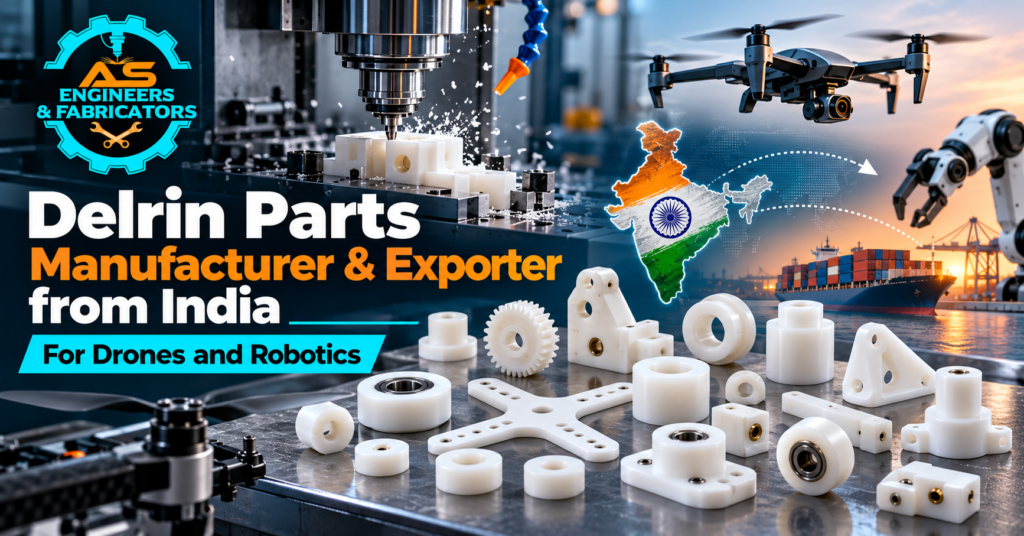 Delrin Parts Manufacturer & Exporter from India for Drones and Robotics
 -
 Best Dish End Shapes for Corrosion-Resistant Tanks and Reactors
 -
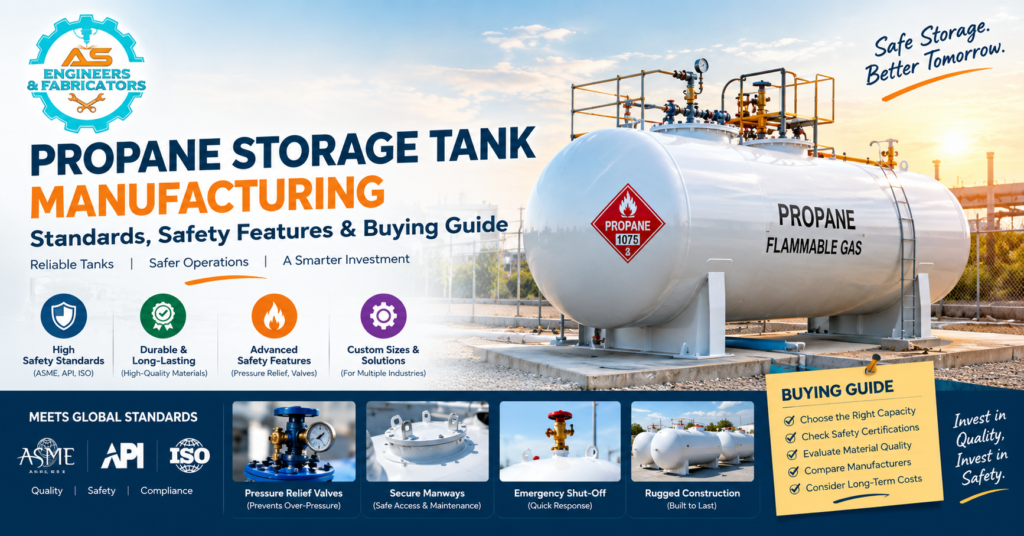 Propane Storage Tank Manufacturing: Standards, Safety Features & Buying Guide
 -
 Pressure Vessel Baffle Plates: Function, Placement & Design Guidelines for Better Flow Control
 -
 Why Delrin (Acetal) Machine Parts Outperform Metal Components in Wear Applications
 -
 Delrin Sprocket Gears vs Delrin Spur Gears: Which One Fits Your Machine Design?
 -
 Forming Clad Dish Ends and Ellipsoidal Heads: Process, Materials & Applications
 -
 ASEFS India and Russia’s Industrial Machinery Sector: Solutions, Expertise and Opportunities
 -
 How ASEFS India Contributes to Singapore’s Industrial Machinery and Equipment Sector
 -
 Construction Indonesia 2026: Connecting Global Construction and Engineering Companies with Indonesia’s Infrastructure Market
 -
 AUTOMEX Penang 2026: Connecting Global Automation Companies with Malaysia’s Smart Manufacturing Industry
 -
 Vietnam Industrial Automation Fiesta (VIAF) 2026: Connecting Global Engineering Companies with Vietnam’s Smart Manufacturing Industry
 -
 Why Air Manifolds Improve Compressed Air Distribution in Manufacturing Plants
 -
 How to Choose the Right Air Receiver Tank for Industrial Applications

At A.S. Engineers & Fabricators, our team excels in designing, manufacturing, and erecting steel structures that set industry benchmarks. We have established a robust presence in metal fabrication, heavy equipment, and steel structures, providing top-tier solutions for industrial plants and high-rise buildings.