Best Dish End Shapes for Corrosion-Resistant Tanks and Reactors
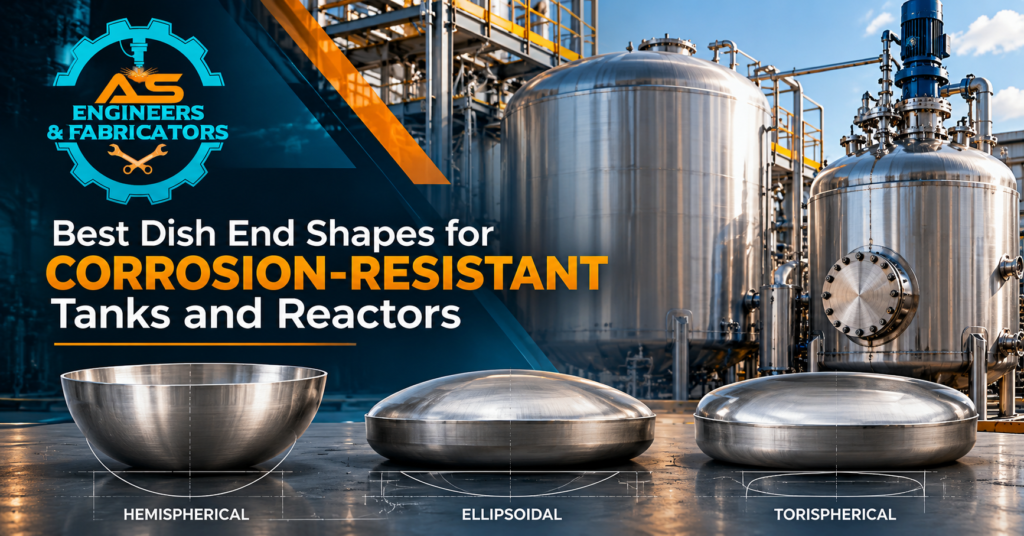
A.S. Engineers & Fabricators Technical Team, Ambernath MIDC, Maharashtra. Selecting a pressure vessel dish end is not just a matter of selecting a curved closure. For tanks and reactors handling corrosive media, the head must satisfy mechanical requirements and allow for effective cleaning, suitable materials, and reliable internal protection.
For general process vessels, an ellipsoidal dish end is often a logical place to start. A torispherical dish end is useful in installations where depth of head is a consideration. A hemispherical dish end has strong mechanical advantages for high-pressure service. Conical bottoms should be considered if discharge is a major process requirement.
But no shape can be corrosion resistant alone. Important to equipment performance are chemical compatibility, temperature, fabrication quality, and the condition of the wetted surface.
This guide discusses how to compare industrial dish ends and what to say about a dish end manufacturer before specifying a tank or reactor.
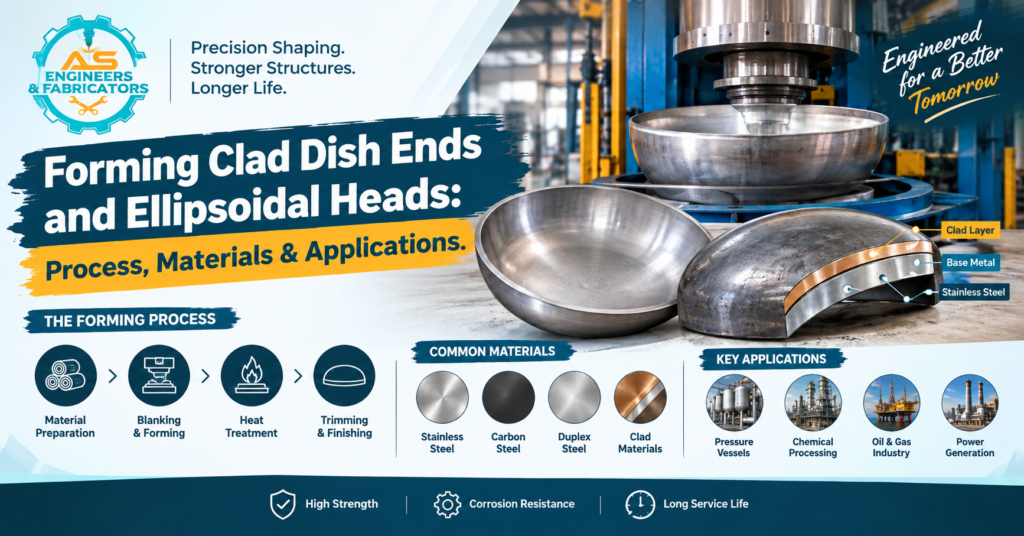
Also Read: Forming Clad Dish Ends and Ellipsoidal Heads: Process, Materials & Applications
What is a dish end?
The dish end, or dished head or vessel head, is a closure to the end of a cylindrical vessel. It may be the top or bottom of a vertical tank or either end of a horizontal vessel.
Common profiles are ellipsoidal, torispherical and hemispherical heads. Conical and flat closures meet further process needs.
The profile chosen will affect the pressure design, available space and the fabrication requirements. For corrosive service, it must also be compatible with the metal chosen, the lining, the nozzles and the inspection arrangements.
Does Dish End Shape Prevent Rust?
The dish end shape does not affect the chemical compatibility of a metal. No matter the profile, even a stainless steel head can corrode under the wrong environment.
However, if the overall vessel layout is free of stagnant pockets, trapped deposits, and difficult-to-clean details, geometry can help control corrosion. Material selection is important, as are smooth, clean surfaces and well-designed joints.
The practical goal is thus to choose a mechanically suitable head and to design its wetted details for the real process. This combined approach, rather than a universal ranking of shapes, provides corrosion resistance.
Ellipsoidal Dish End: A Good Compromise for Process Vessels
The dish end is ellipsoidal, having an elliptical profile and a ratio of 2:1. Its internal dish depth, exclusive of the straight flange, is about one-quarter of its internal diameter.
This profile provides a good compromise between pressure performance and head depth. It is worth considering when a process vessel requires a curved closure but not the depth of a hemispherical head.
When should you consider it?
An ellipsoidal head is considered for general process tanks and reactors where pressure, layout, and fabrication cost must be balanced.
For corrosive media, specify material and/or lining separately. Check outlet position, nozzle projections, and access for cleaning; an elliptical profile does not guarantee complete drainage.
Selection takeaway: An ellipsoidal dish end is a good candidate for many process vessels, based on actual design calculations and service conditions.
Torispherical Dish End: When Head Depth Matters, This Is Handy
Torispherical Head: The shell is joined to a spherical crown by a knuckle of smaller radius. The crown is the main curved surface. The knuckle gives the transition to the wall of the vessel.
Typical flanged-and-dished heads are shallower than 2:1 ellipsoid heads. Their mechanical design must consider stresses around the knuckle, and some configurations require more thickness under similar conditions.
What counts in lined equipment?
Review knuckle and adjacent weld details with a lining specialist for a rubber-lined tank vessel. The substrate must allow for proper application and should be free of sharp edges, holes, or unsuitable weld contours.
The compact head should be chosen to meet the installation and mechanical needs, not because it is assumed that a shallower profile will better resist corrosion.
Takeaway from choosing: For critical head depth, consider a torispherical dish end. 1. Confirm pressure design and lining suitability.
Hemispherical Dish Ends: A Serious Contender for High Pressure Service
The hemispherical dish end is half a sphere. Its internal depth is about half its internal diameter.
The spherical profile is mechanically efficient under pressure. It is a candidate for high-pressure vessels where pressure containment is a major design driver.
What compromises exist?
“This greater depth will affect vessel dimensions and installation space. Final cost can also be affected by forming, segment fabrication and welding and inspection arrangements.
The metal or protective system must still be selected independently for corrosive service. Mechanical efficiency does not create resistance to a specific acid, chloride solution, or reaction mixture.
Selection takeaway: The depth and manufacturing demands of a hemispherical dish end are justified by its high-pressure performance.
Conical Bottoms: Think About Them for Discharge Requirements
Alternatively, one of the three curved dish profiles shown above is replaced by a conical bottom as a vessel closure. ASEFS India deals in conical parts for solids discharge and flow transitions.
If the process involves settled solids, powders, or slurries, then the cone can be assessed with the outlet arrangement. Its angle, discharge opening, and internal details are to be selected according to the material being handled.
The cone does not guarantee free flow. In the process, further assessment of sticky products, bridging, and residue retention may be needed. For pressurised equipment, the cone and shell junction also needs an appropriate mechanical design.
Selection lesson: Assess a conical bottom where the primary requirement is for discharge performance.
Comparison of Dish End Shapes
Shape | Main reason to evaluate it | Important project check |
Ellipsoidal | Balance of pressure performance and depth | Process layout, outlets and cleaning access |
Torispherical | Shallower head profile | Knuckle design, thickness and lining details |
Hemispherical | Efficient internal-pressure containment | Installation depth and fabrication cost |
Conical bottom | Solids or slurry discharge requirements | Flow behaviour, cone geometry and outlet design |
This is a selection scheme, not a corrosion resistance ranking. The final choice depends on the vessel design and process specification.
Corrosion Resistant Equipment: Material Selection
Define the total chemical environment before selecting a metal or liner. The term “chemical service” cannot be reliably supported with a specification.
Chemical names and concentrations.
Normal and maximum temperatures.
Impurities, including chlorides where relevant.
Cleaning chemicals and cleaning conditions.
Solids content and expected abrasion.
Operating pressure, vacuum and cycling conditions.
Stainless steel performance is dependent on alloy composition and environment. Pitting and crevice corrosion are of particular concern in chloride-containing service. If the alloy content is higher, resistance may be improved, but the compatibility must be evaluated for the actual conditions.
If the information is incomplete, consult the material supplier about corrosion data or suitable testing before finalising the specification.
Industrial Rubber Lining Chemical Tank Lining
Rubber lining provides a protective barrier between a steel substrate and a compatible process medium. The lining compound, temperature limits and application requirements shall be suited to the service.
ASEFS India explains hard and soft rubber lining options chosen to meet media and temperature specifications.
Why Construction Details Matter
Blair Rubber’s fabrication instructions emphasise continuous welds in covered areas, smooth radiused details and surfaces free of holes. These requirements demonstrate the importance of considering the suitability of linings during vessel fabrication.
To review the proposed lined head: – Weld profiles and surface preparation
Weld contours and surface preparation.
Internal transitions and nozzle connections.
Application and curing access.
Lining terminations and inspection arrangements.
The supplier’s requirements for the chosen compound.
1. Dish End Manufacturing Process and Quality Control
A good profile of a drawing is only the beginning. The delivered component shall meet the approved material, dimensions, and fabrication requirements.
ASEFS India explains the pressing and spinning methods used in its dish-end manufacturing process. Buyers shall verify the manufacturing route and acceptance criteria for their specific order.
The project inspection plan should identify the required checks, who will do them, and what records will be provided on delivery. According to the specifications, the review may contain:
Identification and traceability of materials
Material identification and traceability.
Dimensional inspection of the formed profile.
Verification of required finished thickness.
Weld inspection and specified non-destructive testing.
Surface condition and lining preparation.
Final documentation and release requirements.
You don’t have to make every test mandatory for every head. Inspection requirements shall be in accordance with the approved design, construction code, and purchase specification.
What a Buyer Must Confirm: ASME Standards for Pressure Vessels
The choice of an ellipsoidal, torispherical, or hemispherical profile does not by itself ensure ASME compliance.
Comparison of Pressure Vessel Engineering shows that the head geometry has an effect on the required thickness for a given design case. Those sample values cannot be directly transferred to another vessel.
Specify the applicable section, division, edition, and certification scope in the inquiry if ASME construction is required. Obtain confirmation of design basis, materials, examination requirements, and documentation.
Buyers looking for a pressure vessel manufacturer in India should also distinguish between a component quote and responsibility for the whole vessel.
What to Send to a Custom Dish End Manufacturer
A clear inquiry allows a custom dish-end manufacturer to evaluate the request and quote against defined requirements.
Add:
Head type and drawing reference.
Diameter, dimensions, tolerances and quantity.
Material grade and specified finished thickness.
Design pressure, temperature and vacuum conditions.
Process medium and corrosion-protection requirements.
Nozzle openings, edge preparation and surface finish.
Construction code and inspection requirements.
Delivery destination and required documentation.
For lined equipment, include the lining specification early. This helps align fabrication details with the intended protective system.
ASEFS India Industrial Fabrication Services
A.S. Engineers & Fabricators is an engineering and fabrication company at Ambernath MIDC, Maharashtra. The company’s website states it has over 38 years of industry experience.
It manufactures ellipsoidal, torispherical, and hemispherical dish ends, together with flat and conical components. The company also offers pressure vessel and tank services and industrial rubber lining.
For an inquiry for a tank or reactor, please provide the process specification and drawings to enable review of the proposed scope, manufacturing requirements, and corrosion protection details.
Contact A.S. Engineers & Fabricators
Address: Plot No. W-108/1, Anand Nagar, Additional MIDC, Ambernath East, Thane – 421506, Maharashtra, India.
Phone: +91 92267 69978
Email: info@asefsindia.com
Website: ASEFS India
Also Read: Delrin Sprocket Gears vs Delrin Spur Gears: Which One Fits Your Machine Design
Conclusion
A.S. Engineers & Fabricators best dish end shape is dependent on the pressure requirements of the vessel, the available space, and process needs. Ellipsoidal heads are a compromise, torispherical heads have a flatter profile, and hemispherical heads are contenders for high-pressure service. Conical bottoms should be considered if the discharge requirements are critical.
For tanks and reactors that are corrosion resistant, water treatment adds to this mechanical selection compatible materials, appropriate lining details, and a defined inspection plan. A capable industrial fabrication partner should review these requirements.
FAQs
1. What is the ideal end shape for corrosion-resistant tanks?
Ans: There is no single best shape. Choose the profile for mechanical and process requirements and select compatible materials, linings, and fabrication details to determine corrosion resistance.
2. Is the ellipsoidal dish end suitable for a reactor?
Ans: It may be so. The design pressure, temperature, process layout, materials, and applicable construction requirements of the reactor determine its suitability.
3. Do the hemispherical dish ends corrode more easily?
Ans: The main advantage of these is the mechanical efficiency under internal pressure. They do not have better chemical resistance than other shapes of the same material.
4. Can a torispherical dish end be rubber-lined?
Ans: It can be evaluated for lining provided that the geometry, weld details, and substrate preparation meet the requirements of the chosen lining system.
5. Is a protective lining a substitute for corrosion allowance?
Ans: They have different functions. Adding metal thickness isn’t a substitute for checking compatibility or specifying a required lining system.
Recent Posts
-
Best Dish End Shapes for Corrosion-Resistant Tanks and Reactors
-
 Propane Storage Tank Manufacturing: Standards, Safety Features & Buying Guide
 -
 Pressure Vessel Baffle Plates: Function, Placement & Design Guidelines for Better Flow Control
 -
 Why Delrin (Acetal) Machine Parts Outperform Metal Components in Wear Applications
 -
 Delrin Sprocket Gears vs Delrin Spur Gears: Which One Fits Your Machine Design?
 -
 Forming Clad Dish Ends and Ellipsoidal Heads: Process, Materials & Applications
 -
 ASEFS India and Russia’s Industrial Machinery Sector: Solutions, Expertise and Opportunities
 -
 How ASEFS India Contributes to Singapore’s Industrial Machinery and Equipment Sector
 -
 Construction Indonesia 2026: Connecting Global Construction and Engineering Companies with Indonesia’s Infrastructure Market
 -
 AUTOMEX Penang 2026: Connecting Global Automation Companies with Malaysia’s Smart Manufacturing Industry
 -
 Vietnam Industrial Automation Fiesta (VIAF) 2026: Connecting Global Engineering Companies with Vietnam’s Smart Manufacturing Industry
 -
 Why Air Manifolds Improve Compressed Air Distribution in Manufacturing Plants
 -
 How to Choose the Right Air Receiver Tank for Industrial Applications
 -
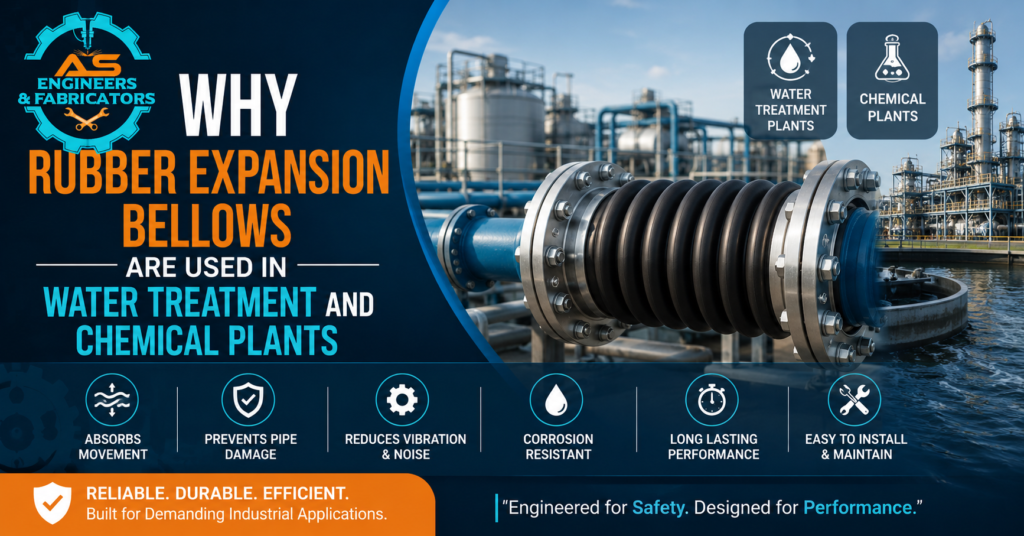 Why Rubber Expansion Bellows Are Used in Water Treatment and Chemical Plants
 -
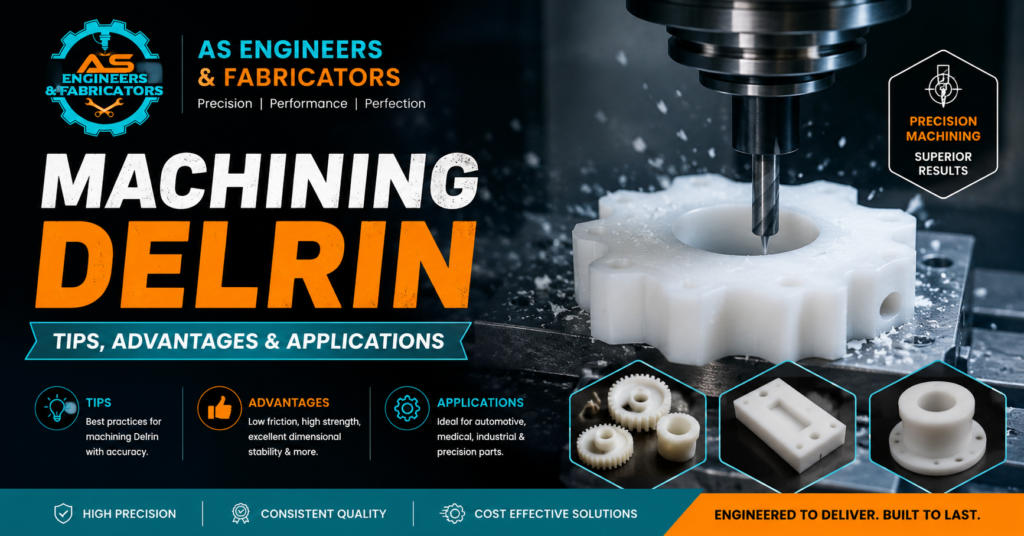 Machining Delrin: Tips, Advantages & Applications

I help Engineering Importers achieve Rapid Growth and make a Positive Market Impact. I help Client achieve their Business Goals