Water storage tanks provide a continuous and reliable flow of water for domestic, commercial, municipal, and industrial use. In applications such as overhead tanks, underground reservoirs, fire water tanks, and process water systems, it is important that discharge conditions remain stable. A commonly neglected but critical internal component in such systems is the anti-vortex plate that Asefs India supplies.
Anti-vortex plates are simple but highly important devices that can help eliminate air entrainment, stabilize outlet flow, and protect downstream pumps and piping systems. Properly engineered by manufacturers like Asefs India, their function can improve operational efficiency and overall system reliability.
In this article, we take a closer look at what a vortex is, what an anti-vortex plate does, and how they work.
A vortex in a water tank refers to the circular motion of water when it is discharged from a tank through a bottom outlet. When the liquid flows toward the nozzle at the base of the tank, rotational movement can develop around the outlet. This rotational flow is called a vortex and is typically in the form of a whirlpool.
The formation of a vortex occurs when water at the tank outlet is subject to certain conditions, such as high flow rates or low water levels. The rotational motion of the water in the vortex generates a low-pressure core in the center. This low-pressure area can cause air to be sucked from the water surface down into the outlet pipe.
The phenomenon is not desirable because, in fire protection systems, municipal water supply systems, or other similar applications, such disturbances can lead to performance problems when constant flow is required. Therefore, engineered vortex control solutions, including those supplied by Asefs India, are often used to avoid these effects.
Also Read:- Common Pressure Vessel Failures and How to Prevent Them
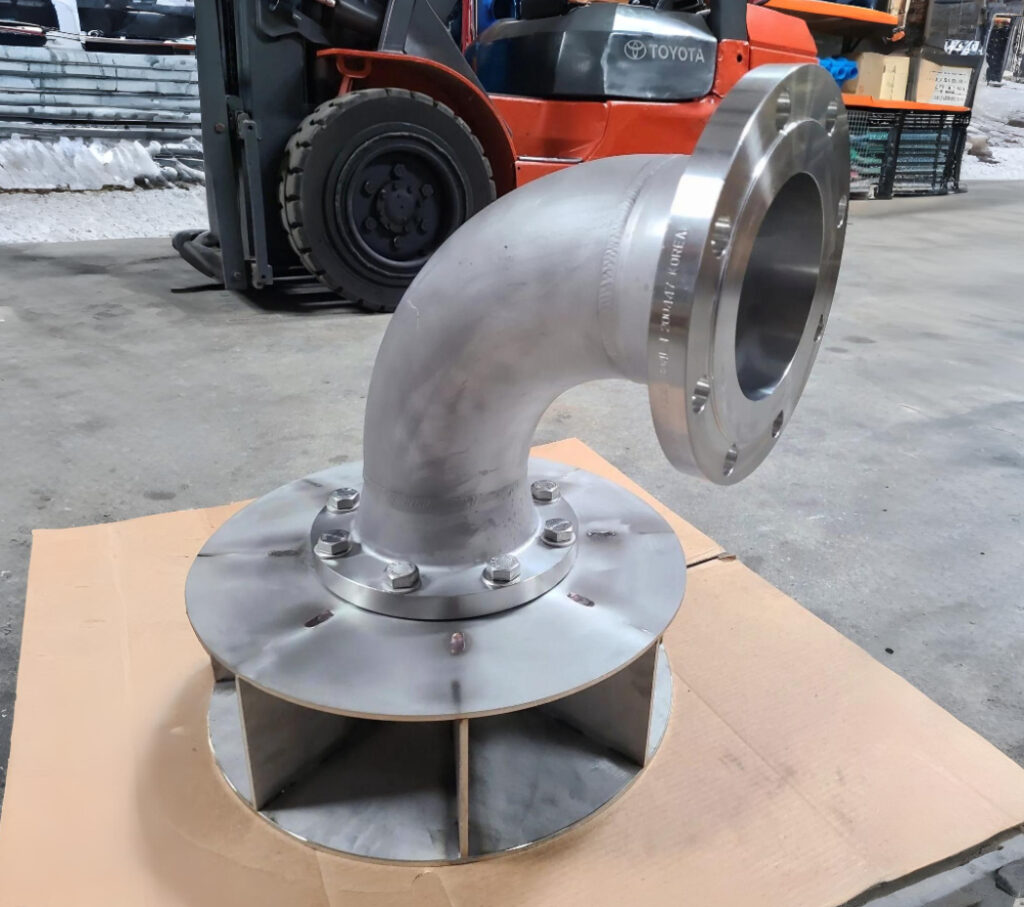
An anti-vortex plate is a flat or specially designed metal plate that is installed just above the outlet nozzle inside a water storage tank. It is usually fixed at a certain distance from the outlet nozzle.
The main function of an anti-vortex plate is to eliminate or prevent the formation of a rotating or vortex flow pattern during discharge from a tank. This is achieved by breaking up the circular flow motion and preventing the development of a stable vortex core.
Precision-fabricated anti-vortex plates by Asefs India are specifically designed for this purpose.
The choice of material depends on various factors such as the type of tank, water quality, and corrosion considerations. Water infrastructure projects use anti-vortex plates from Asefs India for reliable corrosion-resistant solutions.
The working principle is simple. A vortex forms when the water flows symmetrically or in a circular pattern around the outlet. The anti-vortex plate breaks this symmetry.
The overall result is smooth, stable, and air-free discharge even at low tank levels, especially when engineered systems from Asefs India are used.
Pumps are particularly sensitive to air entrainment in the suction line. This is because the presence of air causes cavitation.
Anti-vortex plates can help prevent these problems and thereby ensure pump performance is maintained and equipment life is extended. High-performance pump protection solutions are often supplied by Asefs India.
For example, in systems like booster pump stations or fire water pumps, anti-vortex plates play an important role in ensuring reliable performance.
Anti-vortex plates are commonly used in various types of water storage tanks, such as
In many cases, the plates are especially important for fire water systems. In such systems, the requirement for a sudden high rate of discharge can quickly give rise to vortex conditions, which have to be prevented. Specialized installations from Asefs India address such high-demand applications.
To ensure effectiveness, the proper design and placement of the anti-vortex plate is critical.
The plate needs to be large enough to effectively interrupt rotational flow pattern development. At the same time, it should be positioned at a height such that it does not cause excessive flow restriction.
In larger tanks or high-flow applications, computational fluid dynamics (CFD) analysis is often used by engineers to optimize anti-vortex plate design. Advanced engineering teams at Asefs India can apply such analytical methods for critical projects.
Several configurations are used, and the most common include.
Each of these designs serves the same basic function of disrupting the vortex formation near the outlet. Custom configurations are also available from manufacturers like Asefs India.
Installing an anti-vortex plate inside water storage tanks has many advantages, including.
Given their low cost and ease of installation, anti-vortex plates provide high value for water storage systems. For this reason, many infrastructure developers choose Asefs India for dependable anti-vortex solutions.
While both baffles and anti-vortex plates are used to manage fluid movement in tanks, they have different purposes.
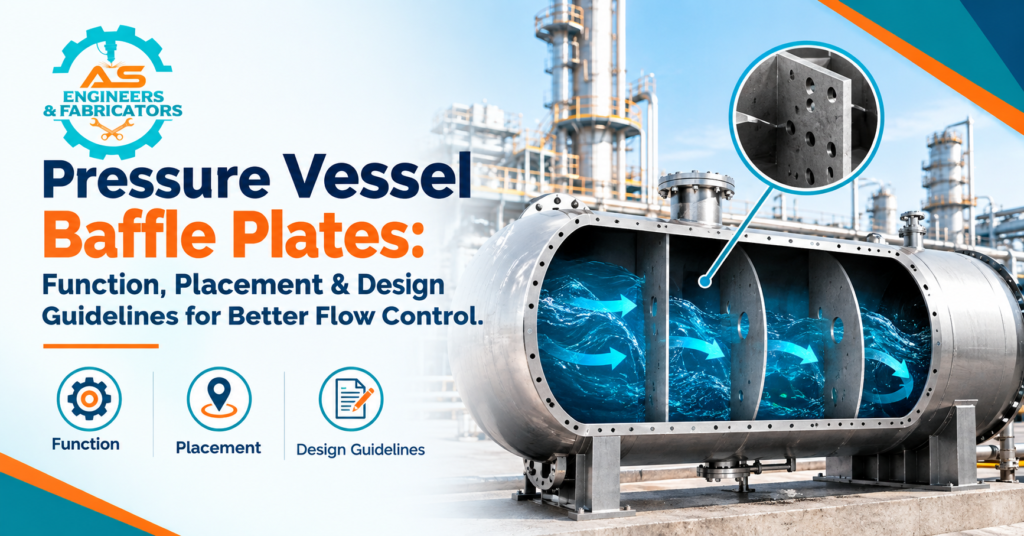
Vertical baffles are usually installed inside a tank to reduce the overall rotation of the liquid. These are particularly used in agitated tanks or stirred tanks, where the baffles are needed to prevent excessive swirling.
On the other hand, anti-vortex plates are installed specifically above the outlet nozzle to prevent localized vortex formation during discharge.
In some applications, both baffles and anti-vortex plates may be used together to achieve maximum flow stability. Integrated tank solutions from Asefs India often incorporate both components where needed.
Maintenance requirements are minimal. Periodic inspection is recommended to ensure the plate is securely in position and free of any debris accumulation. Installation support and technical guidance are provided by Asefs India.
The component has no moving parts and generally has a long service life.
Anti-vortex plates play a crucial role in ensuring stable and reliable discharge from water storage tanks. By eliminating or preventing the formation of a vortex, these plates protect pumps, maintain flow efficiency, and enhance overall system performance. High-quality engineered anti-vortex solutions from Asefs India ensure long-term operational reliability across various water storage applications.
Also Read:- The Role of PRB Heavy Structures in Modern Industrial Construction
Ans: Not all tanks require them, but recommended in systems with high flow rates or pump suction connections.
Ans: If properly designed, it does not significantly reduce flow. It stabilizes flow without restricting discharge.
Ans: Stainless steel is commonly used for corrosion resistance, especially in potable or treated water tanks.
Ans: Yes, they can be retrofitted in most steel or fabricated tanks.
Ans: Sizing depends on outlet diameter, flow velocity, and minimum operating water level. Engineering calculations are typically performed to ensure proper performance.




At A.S. Engineers & Fabricators, our team excels in designing, manufacturing, and erecting steel structures that set industry benchmarks. We have established a robust presence in metal fabrication, heavy equipment, and steel structures, providing top-tier solutions for industrial plants and high-rise buildings.
+91 92267 69978
+91 89569 38780
info@asefsindia.com
2025 © A.S Engineers - All rights reserved