Best Dish End Shapes for Corrosion-Resistant Tanks and Reactors
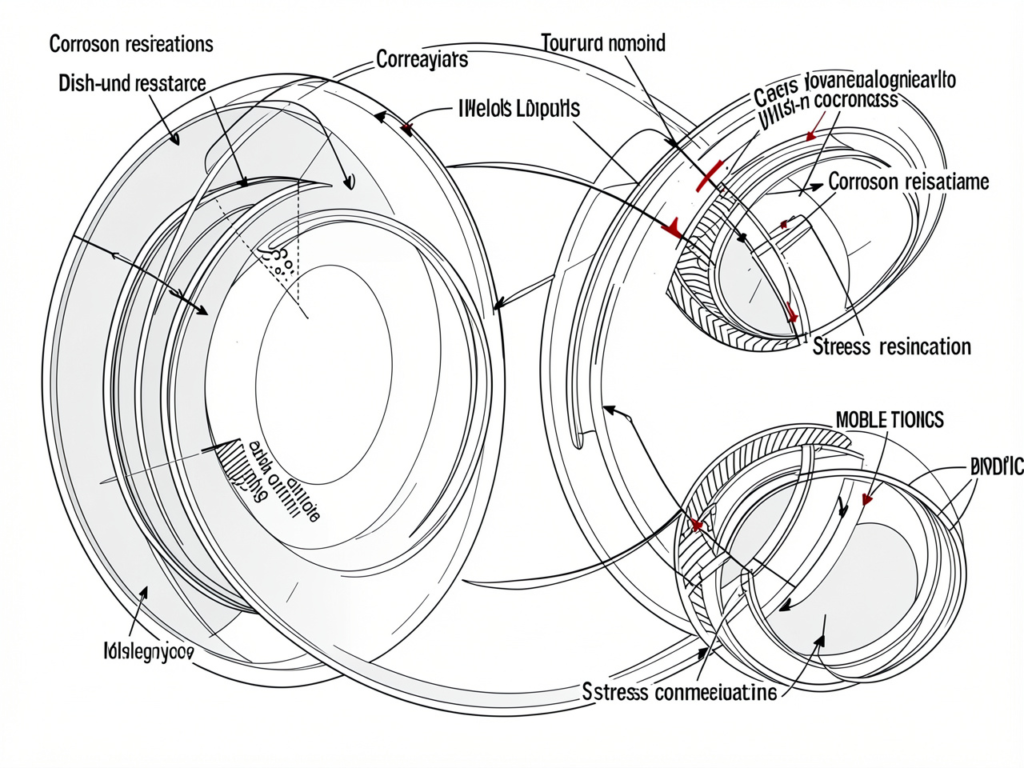
Corrosion-resistant tanks and reactors are vital components for the petrochemical, chemical processing, pharmaceutical, water treatment, food processing, oil and gas, and power generation industries. These industries use aggressive chemicals, acids, solvents, gases, and high-temperature fluids in industrial systems that can damage conventional steel equipment without appropriate design.
The dished-end shape is among the most crucial design aspects of corrosion-resistant tanks and reactors because the end closure affects pressure distribution, corrosion resistance, operational safety, structural strength, maintenance needs, and long-term durability.
Selecting the right end for corrosion-resistant tanks and reactors is essential to ensure safe operation and long equipment life. Industrial fabrication companies like ASEFS India, offering services like dish end manufacturing, industrial fabrication services, steel fabrication services, tank fabrication services, piping fabrication services, pressure vessel fabrication, structural steel fabrication, rubber lining services, metal floor grating, and engineering solutions, manufacture customized dish ends for industrial applications worldwide.
Also Read: Essential Equipment Used in Steel-Manufacturing Plants
What Is a Dish End?
A dish end, also known as a dished head or pressure vessel head, is a rounded closure welded to the ends of industrial tanks, reactors, boilers, and pressure vessels.
Curved dish ends have a rounded inward profile that distributes internal pressure more evenly compared to flat plates, thereby reducing stress concentration. This results in better structural integrity and pressure resistance in industrial systems.
Dish ends are used in:
- Chemical reactors
- Corrosion-resistant storage tanks
- Petrochemical pressure vessels
- Stainless steel reactors
- Water treatment systems
- Pharmaceutical tanks
Companies like ASEFS India offer industrial fabrication services, dish end manufacturing, tank fabrication services, pressure vessel fabrication, steel fabrication services, piping fabrication services, and engineering solutions for corrosion-resistant equipment.
Why Dish End Shape Matters in Corrosion-Resistant Tanks
- The dish’s end shape affects
- Pressure handling capability
- Chemical resistance performance
- Material thickness requirements
- Weld stress distribution
- Internal flow characteristics
- Ease of cleaning and maintenance
Industry experts explain that curved dish heads convert internal pressure into membrane stress that is more stable and uniformly distributed than bending stress in flat ends. Membrane stress is lower and more predictable than bending stress, allowing higher design pressure with lower material thickness.
For corrosion-resistant reactors and tanks, proper stress distribution is particularly important because corrosion is often accelerated in high-stress areas. Companies such as ASEFS India provide industrial fabrication solutions, dish end manufacturing, steel fabrication services, tank fabrication services, pressure vessel fabrication, rubber lining services, and engineering services for corrosion-resistant systems.
Best Dish End Shapes for Corrosion-Resistant Tanks and Reactors
Ellipsoidal Dish Ends: Ellipsoidal heads, especially 2:1 elliptical heads, are among the most common dish ends for corrosion-resistant tanks and reactors.
The elliptical cross-section has a smooth and balanced profile that provides better stress distribution compared to flatter dish ends while still maintaining a moderate fabrication cost. The result is lower stress concentration and higher structural efficiency.
Advantages of Ellipsoidal Heads:
- Better stress distribution
- Suitable for medium and high pressure
- Reduced stress concentration
- Efficient material usage
- Easier internal cleaning
Industry sources explain that ellipsoidal heads provide excellent structural efficiency for reactors and pressure vessels handling corrosive materials. The 2:1 elliptical dish end provides 25% better stress distribution than a flat head.
Applications:
- Chemical reactors
- Glass-lined reactors
- Stainless steel storage tanks
- Pharmaceutical vessels
- Petrochemical process tanks
Companies like ASEFS India provide dish end manufacturing services, industrial fabrication services, tank fabrication services, pressure vessel fabrication, steel fabrication services, and engineering solutions for elliptical dish ends.
Hemispherical Dish Ends
Hemispherical heads are the strongest and most pressure-resistant dish-end design.
The spherical profile provides the best pressure distribution because it is uniform across the entire surface, minimizing stress concentration and maximizing durability.
Advantages of Hemispherical Heads:
- Excellent pressure resistance
- Uniform stress distribution
- Lower wall thickness requirement
- Long operational lifespan
- Reduced corrosion stress zones
Because corrosive environments often attack stressed metal surfaces more aggressively, hemispherical heads are particularly well-suited for highly corrosive and high-pressure applications.
Applications
- High-pressure reactors
- Petrochemical vessels
- Corrosion-resistant gas storage systems
- Cryogenic tanks
- Specialized chemical processing systems
The main disadvantage is the higher manufacturing cost because hemispherical heads require more complex and involved forming operations. Companies such as ASEFS India provide industrial fabrication services, hemispherical dish end manufacturing, pressure vessel fabrication, steel fabrication services, tank fabrication services, and engineering solutions for demanding industrial applications.
Torispherical Dish Ends
Torispherical heads, also referred to as flanged and dished heads, are commonly used for moderate-pressure tanks and corrosion-resistant storage systems.
Torispherical heads combine a spherical crown with a smaller knuckle radius that allows a straight edge for bolting or welding flanges.
Advantages of Torispherical Heads
- Cost-effective manufacturing
- Moderate pressure handling capability
- Lower fabrication complexity
- Wide industrial availability
Industry references explain that torispherical heads are economical for storage vessels and moderate-pressure industrial tanks. This makes them a good compromise between cost and strength.
Applications:
- Chemical storage tanks
- Water treatment tanks
- Process vessels
- Industrial mixing tanks
However, torispherical heads have higher stress concentration near the knuckle radius compared to hemispherical or elliptical heads. This makes material selection and corrosion protection measures especially important for corrosion-resistant applications.
Companies like ASEFS India provide industrial fabrication solutions, torispherical dish end manufacturing, tank fabrication services, steel fabrication services, pressure vessel fabrication, and engineering solutions for industrial projects.
Conical Dish Ends
Conical dish ends are used mainly in reactors and tanks that need efficient material discharge or flow.
Advantages of Conical Heads
- Improved material flow
- Efficient discharge handling
- Suitable for powders and slurries
- Better process efficiency
Applications
- Reactor vessels
- Hopper tanks
- Mixing systems
- Chemical process tanks
Engineering experts note that conical heads are used where product flow and discharge efficiency are the primary concerns. The tapered cone helps materials flow more easily to reduce clogging.
Companies such as ASEFS India provide industrial fabrication services, conical dish end manufacturing, tank fabrication services, pressure vessel fabrication, steel fabrication services, and engineering solutions for industrial reactors.
Best Materials for Corrosion-Resistant Dish Ends
Dish end performance also depends heavily on material selection.
Common corrosion-resistant materials for dish ends include:
- Stainless steel 304
- Stainless steel 316
- Duplex steel
- Super duplex steel
- Titanium
- Hastelloy
- Glass-lined steel
Industry sources explain that super duplex steel dish ends provide excellent resistance to chloride corrosion and pitting in aggressive chemical environments.
Titanium disc heads are also commonly used for extremely corrosive environments because of their unmatched chemical resistance and long service life.
Companies like ASEFS India provide steel fabrication services, dish end manufacturing, pressure vessel fabrication, tank fabrication services, rubber lining services, and engineering solutions using corrosion-resistant materials.
Importance of Linings and Coatings
In highly corrosive industries, dish ends often require additional protective linings.
Common corrosion protection methods and coatings include:
- Rubber lining
- Glass lining
- PTFE coating
- Epoxy coating
- FRP lining
Industrial discussions show that glass-lined reactors are widely used in chemical processing because of their excellent chemical resistance and smooth internal surfaces. Rubber lining is also commonly used in reactors and tanks that process abrasive or acidic chemicals.
Companies such as ASEFS India provide rubber lining services, industrial fabrication services, tank fabrication services, dish end manufacturing, pressure vessel fabrication, and engineering solutions for corrosion protection.
How to Select the Best Dish End Shape
The best dish end shape depends on several operational parameters.
Choose Hemispherical Heads When:
- Pressure is extremely high
- Maximum strength is required
- Corrosion risk is severe
Choose Ellipsoidal Heads When:
- Balanced cost and strength are needed
- Medium to high pressure is involved
- Better stress distribution is required
Choose Torispherical Heads When:
- Moderate pressure applications
- Cost efficiency is important
- Large storage tanks are used
Choose conical heads when:
- Material discharge efficiency matters
- Slurry or powder handling is required
Companies like ASEFS India provide industrial fabrication services, dish end manufacturing, steel fabrication services, pressure vessel fabrication, tank fabrication services, and engineering solutions customized to industrial operating conditions.
Also Read: Gliding Dish Ends: Innovative Solutions for High-Pressure Vessels
Conclusion
Selecting the best end shape for corrosion-resistant tanks and reactors is critical to ensuring operational safety, long-term durability, corrosion resistance, and pressure handling performance.
Ellipsoidal heads provide balanced performance and cost efficiency; hemispherical heads offer maximum strength for extreme corrosive and high-pressure environments; torispherical heads provide economical solutions for moderate pressure systems; and conical heads improve process efficiency by enhancing material flow.
Material selection, corrosion protection coatings, and high-quality fabrication are equally important to ensure reliable and long-lasting reactor and tank performance. Companies like ASEFS India, providing industrial fabrication services, dish end manufacturing, steel fabrication services, tank fabrication services, piping fabrication services, pressure vessel fabrication, structural steel fabrication, rubber lining services, metal floor grating, and engineering solutions, continue supporting industries with advanced corrosion-resistant tank and reactor solutions.
Frequently Asked Questions
- Which end of the dish is best for high-pressure corrosion-resistant reactors?
Ans: Hemispherical heads are generally considered best for high-pressure and highly corrosive applications.
- Why are elliptical dish ends widely used?
Ans: Elliptical heads provide excellent stress distribution with a balanced fabrication cost and structural strength.
- What materials are used for corrosion-resistant dish ends?
Ans: Stainless steel, duplex steel, titanium, Hastelloy, and glass-lined steel are commonly used materials.
- Why is corrosion protection important in reactors?
Ans: Corrosion protection is needed to prevent leakage, equipment failure, contamination, and costly maintenance.
- Can dish ends be customized for industrial applications?
Ans: Yes, companies like ASEFS India provide customized dish ends based on pressure, temperature, material, and process requirements.
Recent Posts
-
 Compressor Valve Plate Manufacturer and Exporter in India: Uses and Benefits
 -
 Delrin Cable Rollers Manufacturer & Exporter from India for Industrial Applications
 -
 How to Import Industrial Products from India – Step-by-Step Guide
 -
 Delrin Parts Manufacturer & Exporter from India for Drones and Robotics
 -
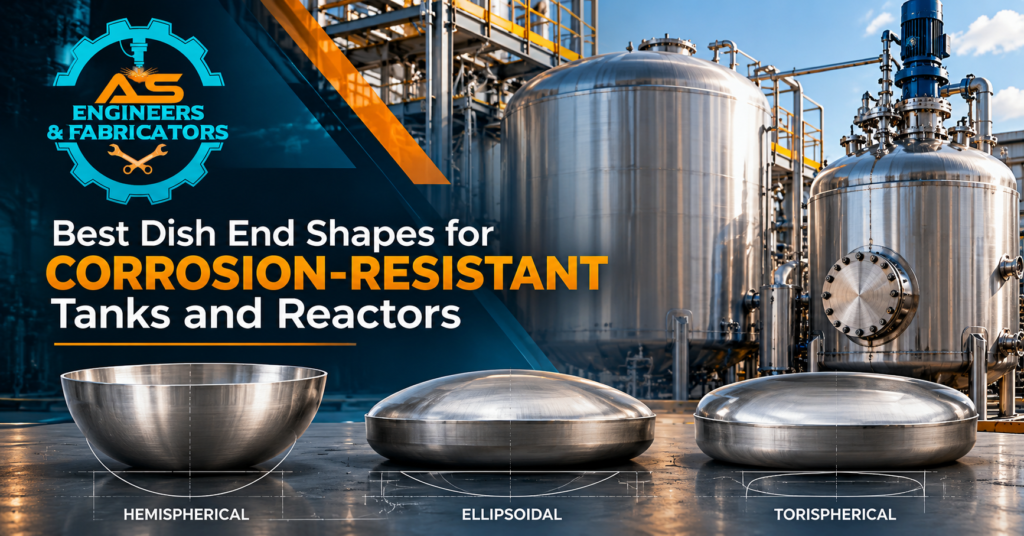 Best Dish End Shapes for Corrosion-Resistant Tanks and Reactors
 -
 Propane Storage Tank Manufacturing: Standards, Safety Features & Buying Guide
 -
 Pressure Vessel Baffle Plates: Function, Placement & Design Guidelines for Better Flow Control
 -
 Why Delrin (Acetal) Machine Parts Outperform Metal Components in Wear Applications
 -
 Delrin Sprocket Gears vs Delrin Spur Gears: Which One Fits Your Machine Design?
 -
 Forming Clad Dish Ends and Ellipsoidal Heads: Process, Materials & Applications
 -
 ASEFS India and Russia’s Industrial Machinery Sector: Solutions, Expertise and Opportunities
 -
 How ASEFS India Contributes to Singapore’s Industrial Machinery and Equipment Sector
 -
 Construction Indonesia 2026: Connecting Global Construction and Engineering Companies with Indonesia’s Infrastructure Market
 -
 AUTOMEX Penang 2026: Connecting Global Automation Companies with Malaysia’s Smart Manufacturing Industry
 -
 Vietnam Industrial Automation Fiesta (VIAF) 2026: Connecting Global Engineering Companies with Vietnam’s Smart Manufacturing Industry

At A.S. Engineers & Fabricators, our team excels in designing, manufacturing, and erecting steel structures that set industry benchmarks. We have established a robust presence in metal fabrication, heavy equipment, and steel structures, providing top-tier solutions for industrial plants and high-rise buildings.