How to Choose the Right Dish End for Industrial Tanks and Pressure Vessels
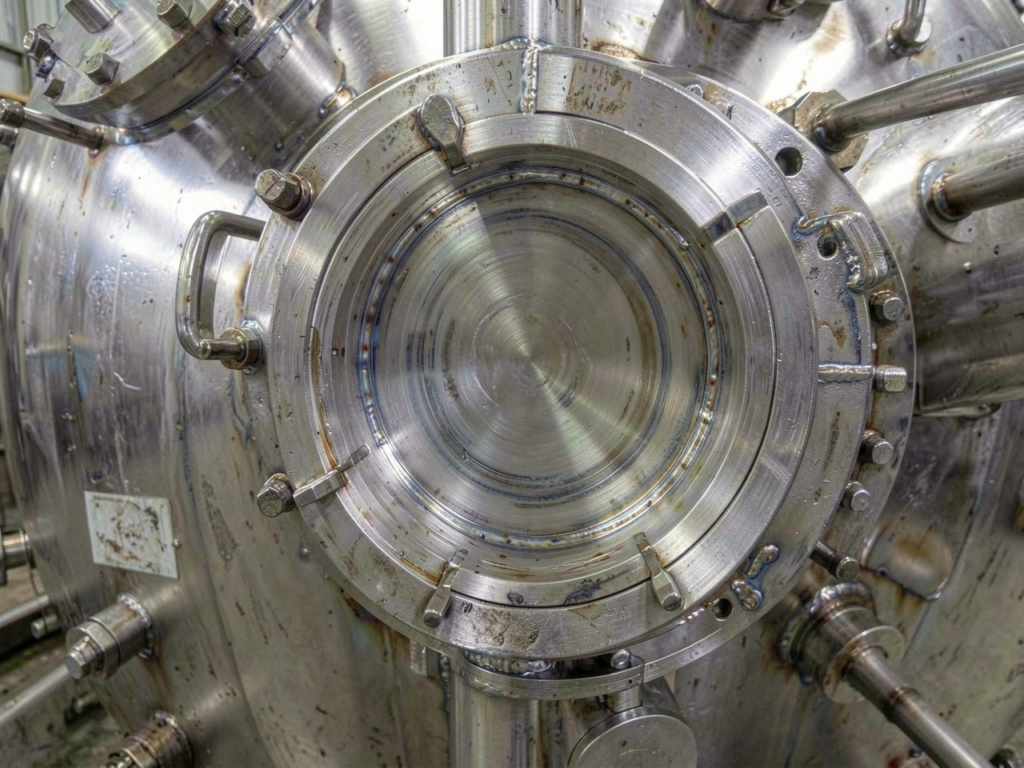
Industrial tanks and pressure vessels are critical assets in a wide range of industries. They store and process fluids under high pressure and temperature. Dish ends are one of the most important components of these tanks and vessels. Dish ends are metal plates used to close the ends of cylindrical tanks and vessels for safety and strength.
Selecting a suitable dish end for industrial vessels is not a trivial task. The wrong dish end can affect pressure resistance, safety, durability, operational efficiency, and fabrication cost. Industrial applications also require different types of dish ends based on pressure, temperature, material, and process conditions.
Industrial fabrication service providers and dish end manufacturers like ASEFS India specialize in providing customized dish ends and pressure vessel components for industrial tanks and vessels.
Also Read: MSRL Tanks and Piping Spools: Corrosion-Resistant Solutions for Chemical Plants
What is a Dish End?
A dish end or dished head, also known as a pressure vessel head, is a concave metal plate used to close the ends of cylindrical tanks and pressure vessels.
Flat plates cannot withstand internal pressure and suffer from stress concentration. The curved shape of a dish evenly distributes pressure and reduces stress concentration. This improves the structural strength of a vessel and enables it to safely handle pressure.
Dish ends are commonly used in:
- Storage tanks
- Pressure vessels
- Reactors
- Heat exchangers
- Boilers
- Chemical process tanks
Dish end manufacturers such as ASEFS India offer industrial fabrication services, dish end manufacturing, tank fabrication services, pressure vessel fabrication, steel fabrication services, piping fabrication services, and engineering solutions for industrial tanks and pressure vessels.
Importance of Selecting the Right Dish End
Choosing the right dish end for industrial vessels is critical for safe and reliable operations.
The wrong dish end can create operational and safety issues, including the following:
- Poor pressure resistance
- High stress concentration
- Reduced equipment life
- High fabrication cost
- Increased maintenance needs
The right dish end can significantly improve the following:
- Pressure handling capability
- Structural integrity
- Operational safety
- Cost efficiency
- Long-term reliability
Manufacturers and engineering references report that dish head geometry affects pressure resistance and structural performance of industrial vessels directly. Industrial fabrication service providers such as ASEFS India offer dish end manufacturing and pressure vessel fabrication solutions based on application-specific requirements.
Types of Dish Ends Used in Industrial Tanks and Pressure Vessels
There are several types of dish ends used in industrial tanks and pressure vessels. Each type has a unique shape, advantages, and common applications.
1. Hemispherical Dish End
A hemispherical dish end is half a sphere in shape. It is one of the strongest dish ends and is used for high-pressure applications.
Advantages:
- Excellent pressure distribution
- High structural strength
- Low wall thickness requirement
- Ideal for extreme pressure conditions
Applications:
- High-pressure vessels
- Gas storage tanks
- Petrochemical reactors
Industry references and manufacturers note that hemispherical heads provide the best pressure distribution and stress reduction. Companies such as ASEFS India provide D-end manufacturing, pressure vessel fabrication, steel fabrication services, tank fabrication services, and engineering solutions for high-pressure industrial vessels.
2. Ellipsoidal Dish End
Ellipsoidal heads, in particular 2:1 elliptical heads, are the most popular dish ends used in industrial tanks and pressure vessels.
Advantages:
- Better stress distribution
- Good pressure resistance
- Cost-effective manufacturing
- Reduced head depth
Applications:
- Chemical tanks
- Storage vessels
- Pharmaceutical reactors
- Industrial process tanks
Manufacturers and engineering references highlight that elliptical heads offer a good balance between strength and cost. Companies like ASEFS India offer industrial fabrication services, dish end manufacturing, tank fabrication services, pressure vessel fabrication, piping fabrication services, and engineering solutions for elliptical pressure vessels and tanks.
3. Torispherical Dish End
Torispherical dish ends are also called flanged and dished heads. Torispherical heads have a spherical crown and a knuckle radius.
Advantages:
- Economical fabrication
- Suitable for moderate pressure
- High availability
- Easy manufacturing process
Applications:
- Water tanks
- Air receivers
- Process vessels
- Industrial storage tanks
Industry references and manufacturers state that torispherical heads are very common due to their economical design and reasonable pressure resistance. Companies like ASEFS India offer industrial fabrication services, dish end manufacturing, steel fabrication services, tank fabrication services, and pressure vessel fabrication services for torispherical heads.
4. Conical Dish End
Conical heads are cone-shaped dish ends. Conical dish ends are preferred when smooth material flow or discharge efficiency is important.
Advantages:
- Smooth material flow
- Gravity discharge suitability
- Useful for hopper systems
Applications:
- Mixing tanks
- Silos
- Chemical reactors
- Hopper vessels
Manufacturers and engineering references explain that conical heads are suitable for systems where the controlled material discharge is important. Companies like ASEFS India offer industrial fabrication services, dish end manufacturing, steel fabrication services, tank fabrication services, piping fabrication services, and engineering solutions for conical pressure vessels and tanks.
Factors to Consider When Selecting a Dish End
The following factors are very important in dish end selection.
1. Operating Pressure
- Operating pressure is one of the most important factors for selecting a dish end.
- High-pressure vessels usually use hemispherical or elliptical heads.
- Torispherical heads are preferred for moderate-pressure applications.
- Flat or conical heads are suitable for low-pressure systems.
Engineering references and studies confirm that curved dish ends handle internal pressure much better than flat plates.
2. Operating Temperature
Operating temperature can also affect material strength and stress distribution.
High-temperature applications may require:
- Special alloys
- Thicker dish ends
- Advanced fabrication processes
Industrial fabrication service providers and niche end manufacturers, such as ASEFS India, offer solutions for high-temperature industrial applications.
3. Material
Dish ends are made of various materials depending on the process environment.
Common materials are:
- Carbon steel
- Stainless steel
- Duplex steel
- Alloy steel
Material selection depends on corrosion resistance, pressure, temperature, and chemical compatibility.
Industrial steel fabricators and dish-end manufacturers, such as ASEFS India, use different industrial-grade materials for pressure vessel and tank fabrication.
4. Corrosion Resistance
Chemicals, acids, and corrosive fluids used in many industries require corrosion-resistant dish ends.
Solutions include:
- Rubber lining
- Epoxy coating
- Stainless steel fabrication
Companies like ASEFS India provide rubber lining, industrial fabrication, dish end manufacturing, tank fabrication services, pressure vessel fabrication, and engineering solutions for corrosion resistance.
5. Fabrication Cost
Budget and fabrication complexity are other important considerations.
- Hemispherical heads are strong but expensive.
- Torispherical heads are more economical.
- Elliptical heads provide a performance-cost tradeoff.
Engineering references and studies note that dish end geometry significantly influences manufacturing cost and material requirements.
Quality of Fabrication
The quality of fabrication is also very important.
Poor fabrication can lead to:
- Cracks
- Uneven thickness
- High stress concentration
- Reduced pressure resistance
Modern dishend manufacturing technologies include the following:
- Hydraulic pressing
- CNC forming
- Precision welding
- Heat treatment
- Quality testing
Manufacturers, engineering references, and studies note that accurate forming and flanging processes are critical for the safe long-term operation of pressure vessels.
Industries Using Dish Ends
Dish ends are used in many industrial sectors.
Oil & Gas Industry
The oil and gas industry uses dish ends in pressure vessels, separators, and storage tanks.
Chemical Industry
The chemical industry uses dish ends in reactors, chemical storage systems, and process vessels.
Pharmaceutical Industry
The pharmaceutical industry uses dished ends in hygienic process tanks and reactors.
Power Plants
Power plants use dish ends in boilers and heat exchangers.
Food Processing Industry
The food processing industry uses dished ends in stainless steel process vessels and storage tanks.
Industrial fabrication service providers, pressure vessel and tank fabricators, and dish end manufacturers, such as ASEFS India, provide customized industrial fabrication, tank fabrication services, pressure vessel fabrication, piping fabrication services, steel fabrication services, dish end manufacturing, structural steel fabrication, rubber lining services, metal floor grating, and engineering solutions for all these industries.
Also Read: Hemispherical vs Ellipsoidal vs Torispherical Dish Ends: Which One Fits Your Application?
Conclusion
Selecting the proper end for industrial tanks and pressure vessels is crucial for safety, pressure resistance, operational efficiency, and long-term reliability. Factors such as operating pressure, temperature, material, corrosion resistance, and fabrication cost should be considered before selecting a dish end type.
Hemispherical, elliptical, torispherical, and conical dish ends are the four most common dish end types used in industrial tanks and pressure vessels. Each type has its own unique advantages and common applications. Industrial fabrication service providers and dish end manufacturers, such as ASEFS India, with specialization in industrial fabrication services, dish end manufacturing, steel fabrication services, tank fabrication services, piping fabrication services, pressure vessel fabrication, structural steel fabrication, rubber lining services, metal floor grating, and engineering solutions, continue to support the industry with customized pressure vessel and tank solutions.
Frequently Asked Questions
- What is a dish end used for?
Ans: A dish end is used to safely close the ends of industrial tanks and pressure vessels.
- Which dish end is best for high pressure?
Ans: Hemispherical dish ends are generally considered the best for high-pressure applications.
- Why are elliptical heads so common?
Ans: Elliptical heads offer good pressure resistance at a lower cost.
- What materials are commonly used for dish ends?
Ans: Carbon steel, stainless steel, duplex steel, and alloy steel are commonly used materials for dish ends.
- Can dish ends be customized for specific industrial applications?
Ans: Yes, companies such as ASEFS India provide customized dish ends based on pressure, temperature, and process requirements.
Recent Posts
-
 Compressor Valve Plate Manufacturer and Exporter in India: Uses and Benefits
 -
 Delrin Cable Rollers Manufacturer & Exporter from India for Industrial Applications
 -
 How to Import Industrial Products from India – Step-by-Step Guide
 -
 Delrin Parts Manufacturer & Exporter from India for Drones and Robotics
 -
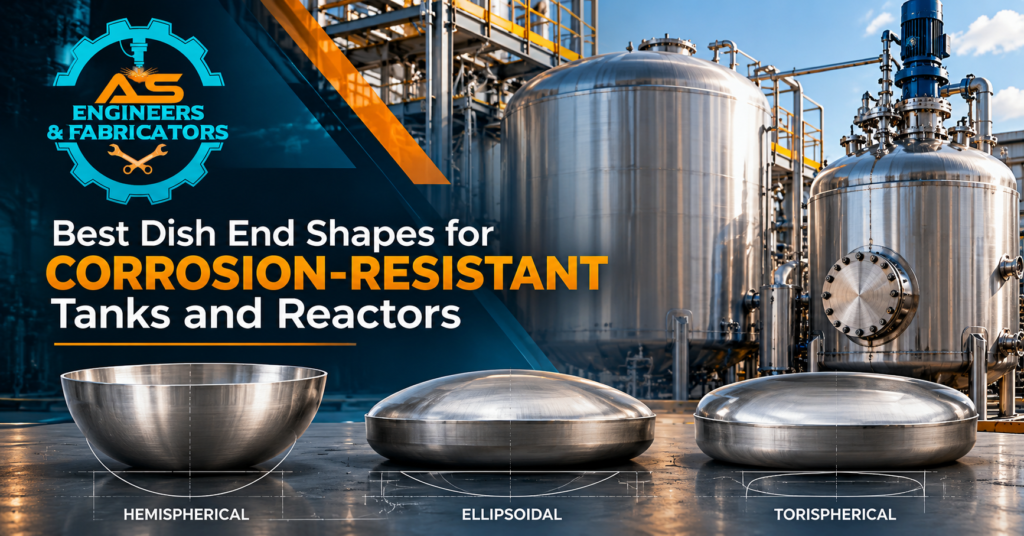 Best Dish End Shapes for Corrosion-Resistant Tanks and Reactors
 -
 Propane Storage Tank Manufacturing: Standards, Safety Features & Buying Guide
 -
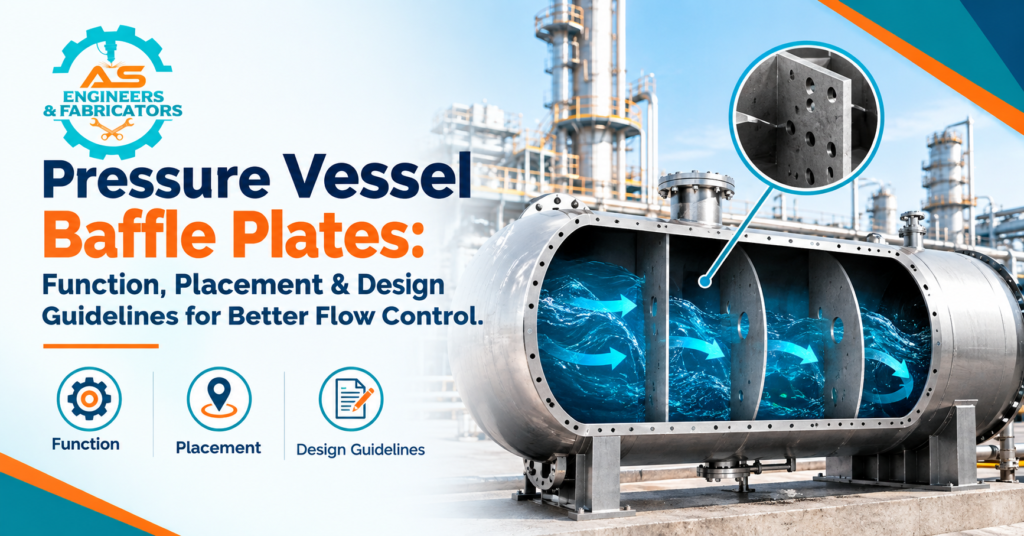 Pressure Vessel Baffle Plates: Function, Placement & Design Guidelines for Better Flow Control
 -
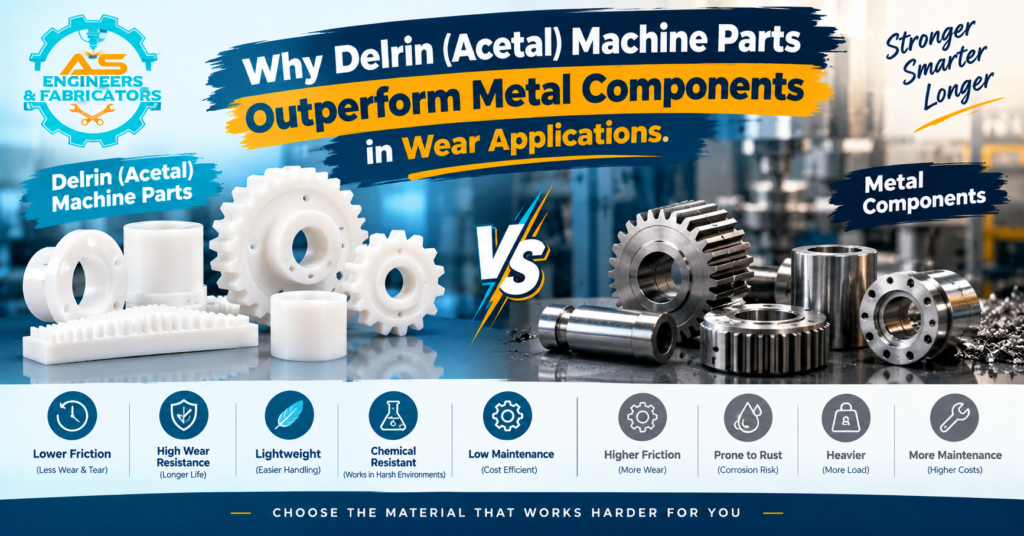 Why Delrin (Acetal) Machine Parts Outperform Metal Components in Wear Applications
 -
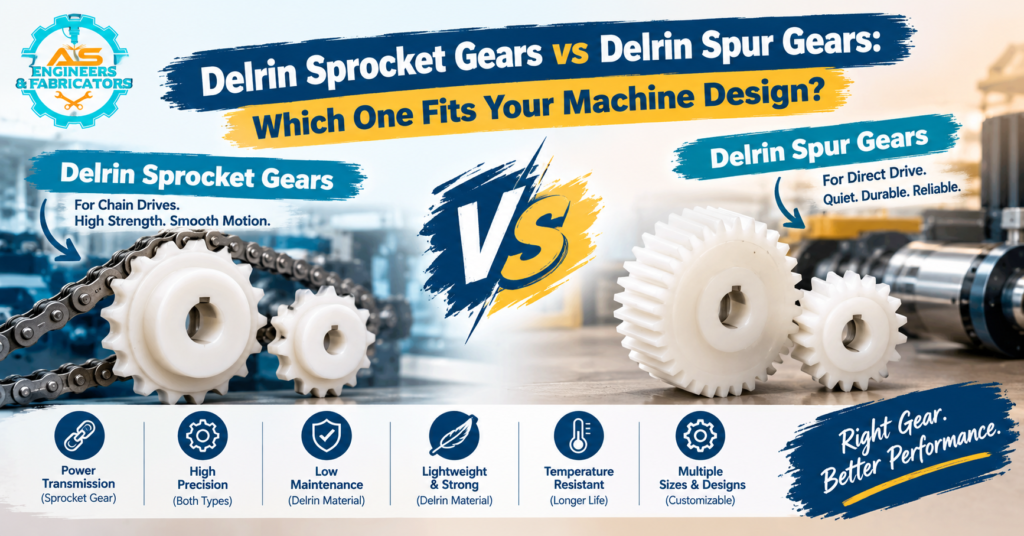 Delrin Sprocket Gears vs Delrin Spur Gears: Which One Fits Your Machine Design?
 -
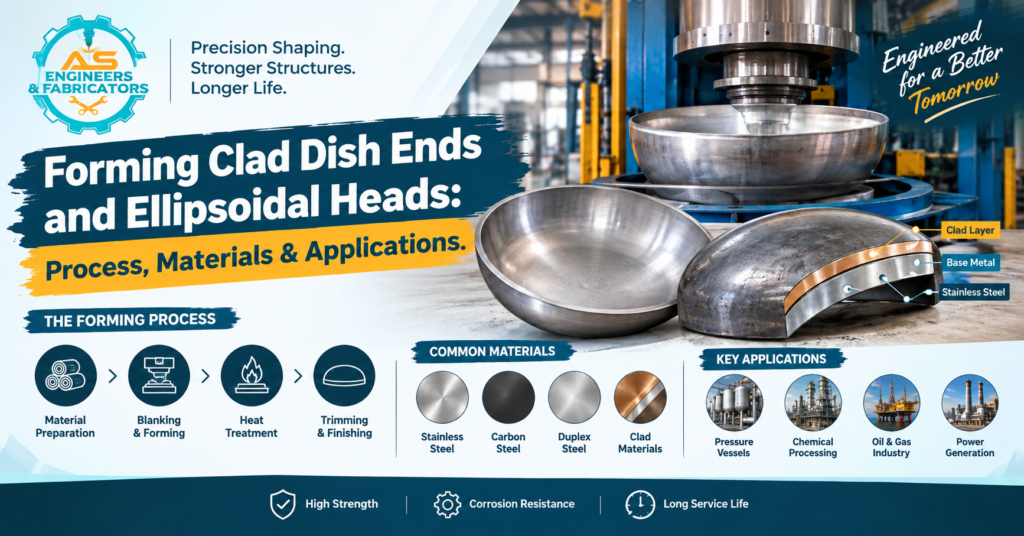 Forming Clad Dish Ends and Ellipsoidal Heads: Process, Materials & Applications
 -
 ASEFS India and Russia’s Industrial Machinery Sector: Solutions, Expertise and Opportunities
 -
 How ASEFS India Contributes to Singapore’s Industrial Machinery and Equipment Sector
 -
 Construction Indonesia 2026: Connecting Global Construction and Engineering Companies with Indonesia’s Infrastructure Market
 -
 AUTOMEX Penang 2026: Connecting Global Automation Companies with Malaysia’s Smart Manufacturing Industry
 -
 Vietnam Industrial Automation Fiesta (VIAF) 2026: Connecting Global Engineering Companies with Vietnam’s Smart Manufacturing Industry

At A.S. Engineers & Fabricators, our team excels in designing, manufacturing, and erecting steel structures that set industry benchmarks. We have established a robust presence in metal fabrication, heavy equipment, and steel structures, providing top-tier solutions for industrial plants and high-rise buildings.