
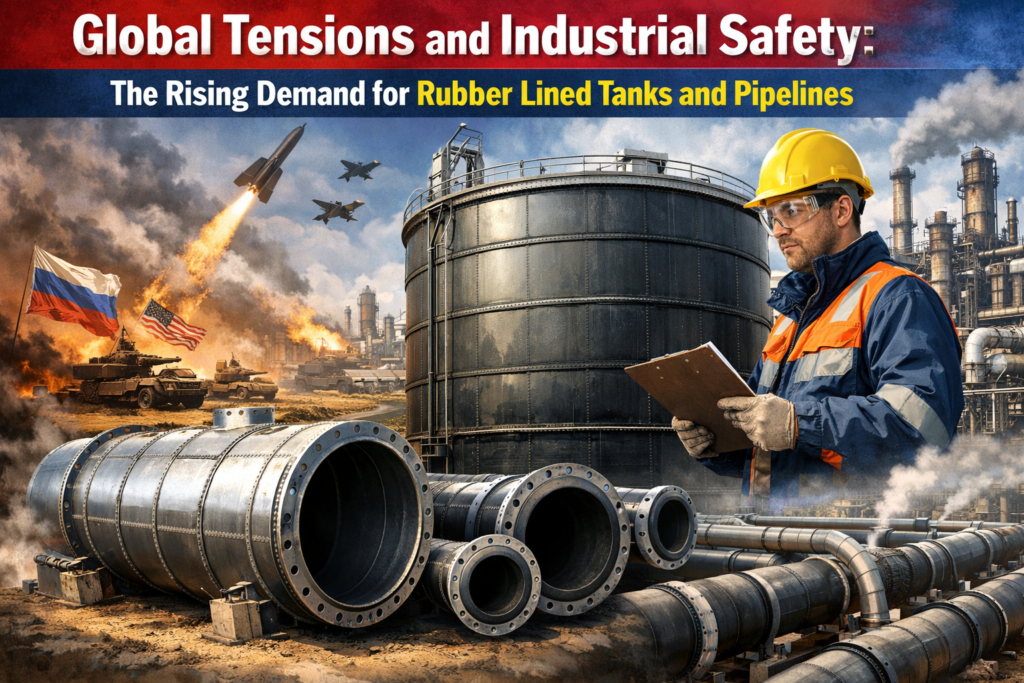
Storage tanks and process vessels in various industrial sectors are often exposed to corrosive chemicals, abrasive slurries, high temperatures, and other aggressive service conditions. Steel tanks left unprotected quickly corrode, leak, get contaminated, and need to be shut down for expensive repairs. Rubber lining of tanks helps to prolong equipment life and enables safe, reliable operations.
At ASEFS India, rubber lining of tanks is done using proven materials, controlled application processes, and stringent quality checks to meet the exacting demands of chemical, pharma, mining, power, and process industry customers. This blog post provides details about the rubber lining process steps, key advantages, and major industrial applications.
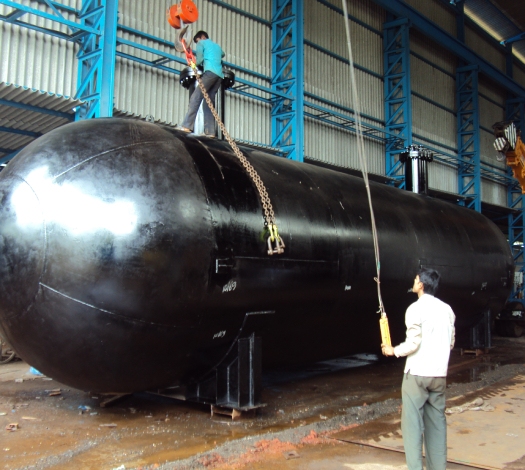
Rubber lining of tanks is a process in which a layer of specially formulated rubber is bonded to the inside surface of steel tanks, vessels, and equipment. The rubber liner acts as a protective barrier between the metal surface and corrosive or abrasive substances in contact with the tank interior.
ASEFS India will select the rubber grade based on chemical compatibility, operating temperature, pressure levels, and abrasion conditions for long-term reliable performance.
Also Read:- Why Galvanized Iron (GI) Remains a Top Choice for Fabrication
Industrial tanks and vessels often store, handle, and process acids, alkalis, solvents, slurries, and other process fluids that can quickly attack and degrade bare steel surfaces.
For industries that cannot afford frequent downtimes or production losses, rubber lining of tanks is not a luxury but a must.
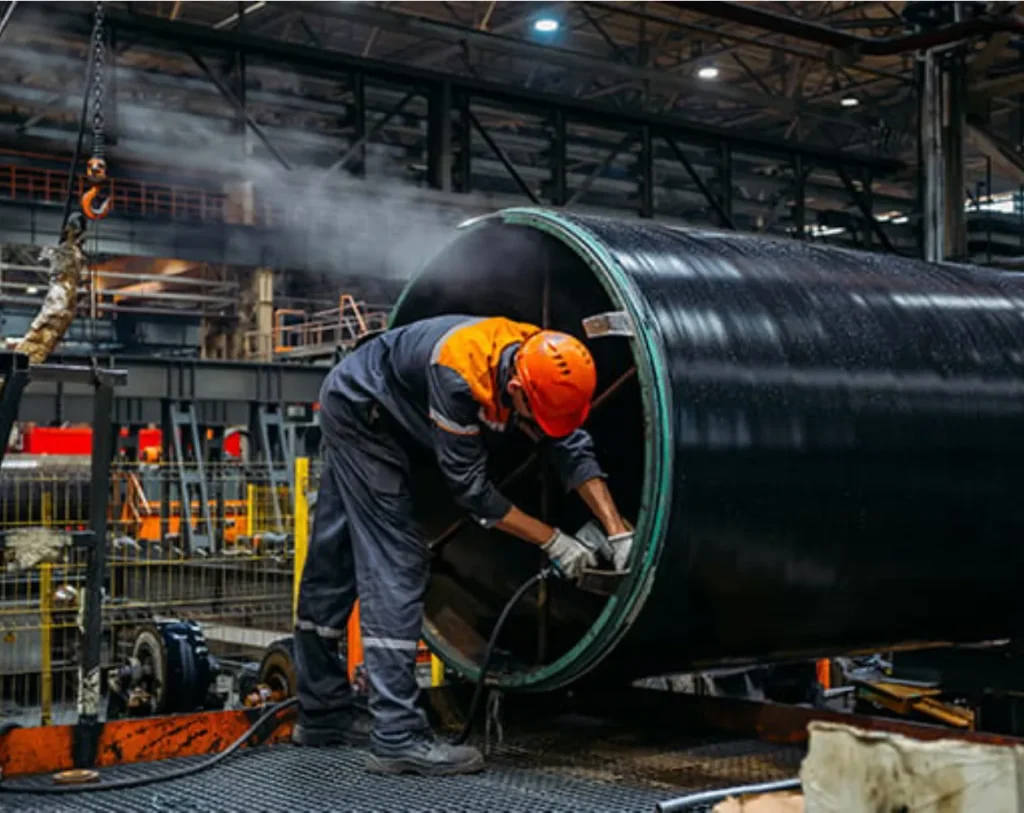
Rubber lining of tanks and vessels is a precise operation that requires skill and strict adherence to procedures. At asefsindia.com, the rubber lining process follows industry best practices and international standards.
Surface preparation is the critical first step for successful rubber lining of tanks. The tank interior is grit blasted to remove rust, scale, and contaminants. Next, the interior is cleaned to achieve the desired surface roughness and profile. Any visible defects, weld sharp edges, or cracks are repaired. Finally, a thorough inspection is done to ensure that the steel surface is clean, profiled, and ready for lining. Proper surface preparation ensures good adhesion between the rubber lining and metal substrate.
After surface preparation is complete, a specially formulated primer is applied to the steel interior. A rubber adhesive system is then applied. The primer and adhesive chemically bond the rubber lining to the metal surface. Appropriate drying time and temperature, and humidity conditions are maintained for the best adhesion.
Pre-cut rubber sheets are now applied to the prepared tank surface. Technicians pay attention to proper alignment, avoid air entrapment, maintain uniform thickness, and ensure a secure bond throughout. Rubber joints are either overlapped or butt-joined, depending on the design.
The rubber lining is now rolled using specialized tools to ensure that no air pockets are trapped, and the rubber is in intimate contact with the steel surface. Seams, corners, and nozzles are all sealed properly.
The rubber lining is then cured (hardened).
The curing time, method, and temperature depend on the rubber type and lining specifications. Curing improves the mechanical strength, elasticity, and chemical resistance of the rubber.
After the rubber lining is complete, the tank is subjected to final inspection. This may include spark testing for pinholes, visual inspection of joints, thickness measurement, and adhesion tests, as required. ASEFS India ensures that every rubber-lined tank meets project and industry quality standards before shipping.
Rubber linings provide excellent resistance to a wide range of aggressive chemicals such as acids, alkalis, salts, solvents, etc. This makes rubber lining ideal for chemical processing and storage tanks.
Rubber lining also resists abrasion from slurries, minerals, and solid particles. It absorbs impact and prevents wear and erosion of the metal surface.
Rubber lining isolates steel from corrosive or abrasive media, significantly increasing the service life of tanks, vessels, and equipment. Lifespans can be extended by many decades with rubber lining.
Rubber lining of tanks is a cost-effective protection solution when compared to frequent repairs, shutdowns, or tank replacement. The long-term savings in maintenance and downtime are significant.
Rubber lining of tanks also prevents leakage, contamination, and loss of product. It is thus an important aspect of ensuring safe plant operations.
Rubber-lined tanks are used in multiple industries, as shown in the table below. The following paragraphs describe some of the most common industrial applications.
Chemical plants use rubber-lined tanks for storing acids, alkalis, salts, and other chemicals. Rubber-lined reaction vessels and chemical mixing tanks are also widely used in the chemical industry.
Rubber lining helps to prevent corrosion and maintain the purity of the chemical processes.
Rubber-lined tanks are also used in pharmaceutical plants to prevent metal contamination, ensure product quality, and handle aggressive cleaning chemicals. ASEFS India has specialized experience in hygienic and compliant rubber lining solutions for pharmaceutical industry clients.
Rubber lining is very common in mining operations where abrasive slurries and corrosive fluids need to be stored and processed. Rubber-lined tanks, thickeners, and process vessels are widely used in mining applications.
Power stations and thermal power plants use rubber-lined tanks for storing demineralized water and various chemical dosing tanks. Rubber lining is also used for effluent handling systems.
Rubber lining of tanks is common in water and wastewater treatment plants. It is used in effluent treatment tanks, neutralization tanks, and chemical storage tanks.
Water treatment is an aggressive environment for tanks, and rubber lining provides the required durability and long life.
ASEFS India is an experienced industrial rubber lining services provider with clients across different sectors.
ASEFS India has its own integrated fabrication and surface treatment capabilities for end-to-end seamless execution of projects.
Rubber-lined tanks and vessels, when properly installed, require minimal maintenance. However, periodic inspection is essential to look for mechanical damage, chemical attack, and signs of rubber aging. If proper material selection and operating conditions are maintained, rubber lining of tanks can have a service life of 10–20 years or even more.
Also Read:-What Are ASME-Certified Pressure Vessels and Why They Matter in India
Rubber lining of tanks is a proven and cost-effective solution to protect industrial equipment against corrosion, abrasion, and chemical attack. By using the right rubber material and following a controlled application process, industries can enjoy safe operations and long service life for their equipment. With its technical expertise and commitment to quality, ASEFS India delivers reliable rubber lining solutions that meet the requirements of chemical, pharma, mining, power, and process industry customers.
Ans: Rubber lining in tanks protects steel tanks from corrosion, abrasion, and chemical attack. It thus significantly increases service life.
Ans: The right rubber grade depends on the type of chemical and the operating temperature. Commonly used rubbers include natural rubber, EPDM rubber, neoprene rubber, and hard rubber.
Ans: With correct application and under suitable operating conditions, rubber lining can last 10–20 years or even longer.
Ans: Yes, old tanks that are in good condition can be rubber-lined after proper surface preparation and inspection.
Ans: Yes, ASEFS India performs spark testing, visual inspection, and other quality checks to ensure the integrity of rubber linings.

I help Engineering Importers achieve Rapid Growth and make a Positive Market Impact. I help Client achieve their Business Goals
+91 92267 69978
+91 89569 38780
info@asefsindia.com
2025 © A.S Engineers - All rights reserved