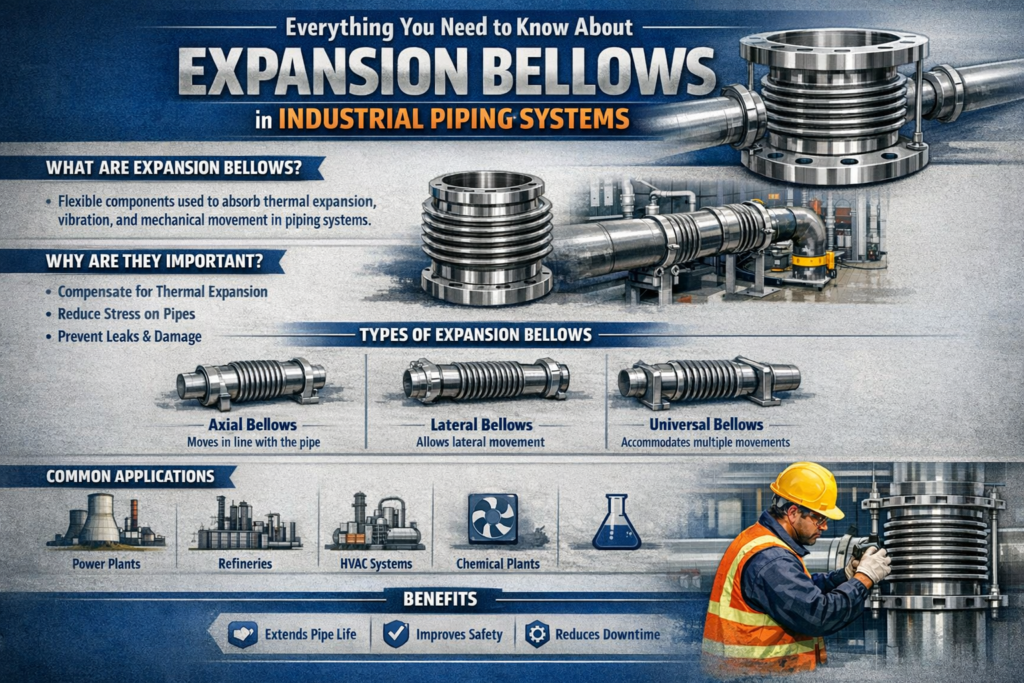
Industrial piping systems are constantly subjected to thermal, vibrational, pressure, and mechanical stresses. These stresses can hurt pipelines, pumps, valves, and associated equipment if movement is not adequately compensated for. Expansion bellows are an effective solution that is widely used in today’s industry.
Expansion bellows are flexible piping components that are installed in industrial piping systems to reduce stress and absorb movement. Expansion bellows are utilized in various industrial sectors, including oil and gas, power plants, petrochemical and chemical facilities, water and wastewater treatment, and heating, ventilation, and air conditioning systems, to ensure safe and reliable operation. Industrial fabrication companies that provide industrial piping support solutions, such as ASEFS India, supply high-quality expansion bellows.
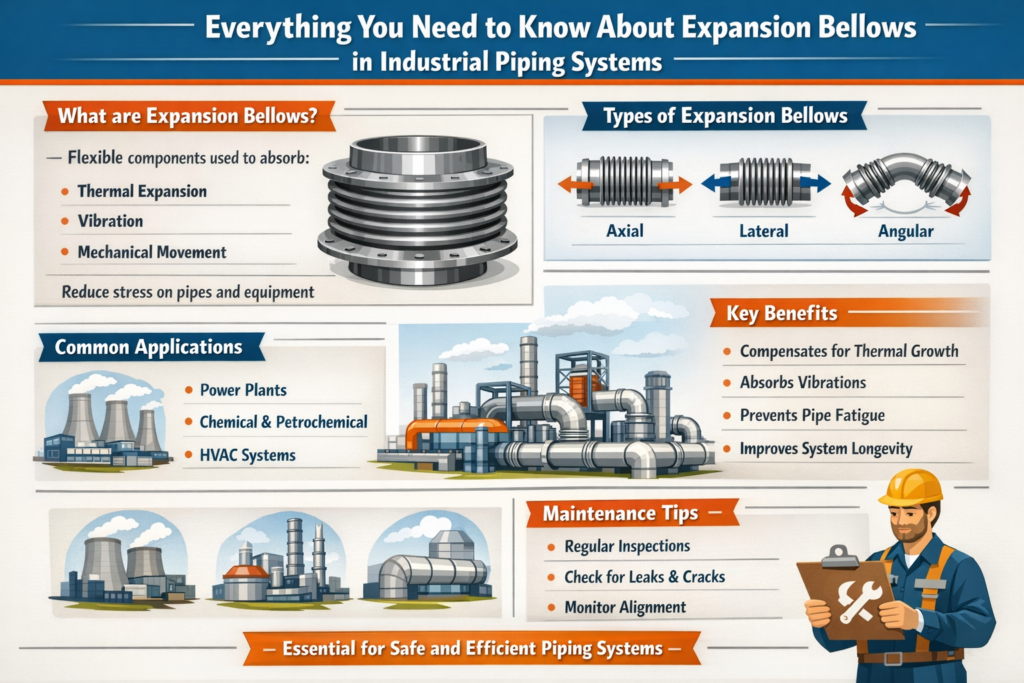
Expansion bellows are flexible mechanical devices that are inserted into piping lines to allow them to absorb movements caused by vibration, pressure fluctuations, and thermal expansion. The bellows themselves are usually made of metal or rubber and are designed to allow controlled movement while containing pressure.
In piping systems, the pipes expand when temperatures increase and contract when temperatures decrease. If this thermal expansion and contraction movement is not accommodated, it can cause serious stress on the pipe network. Expansion bellows absorb the stress by acting as flexible joints within the pipes.
ASEFS India provides fabrication solutions, industrial piping support, and supplies components, including expansion bellows.
Also Read:- Lifting Brackets for Scaffolding: Types, Safety & Applications
Industrial piping is dynamic. When steam, hot water, chemicals, or process fluids are carried through pipes, their temperature changes. When the fluid heats up, it causes the pipe to expand and vice versa. Even a slight increase in temperature can cause long pipeline sections to shift position or move.
Expansion bellows solve these problems by absorbing these stresses and isolating vibrations in the system.
Industry experts, including companies like ASEFS India, recommend expansion bellows as an important element of piping systems.
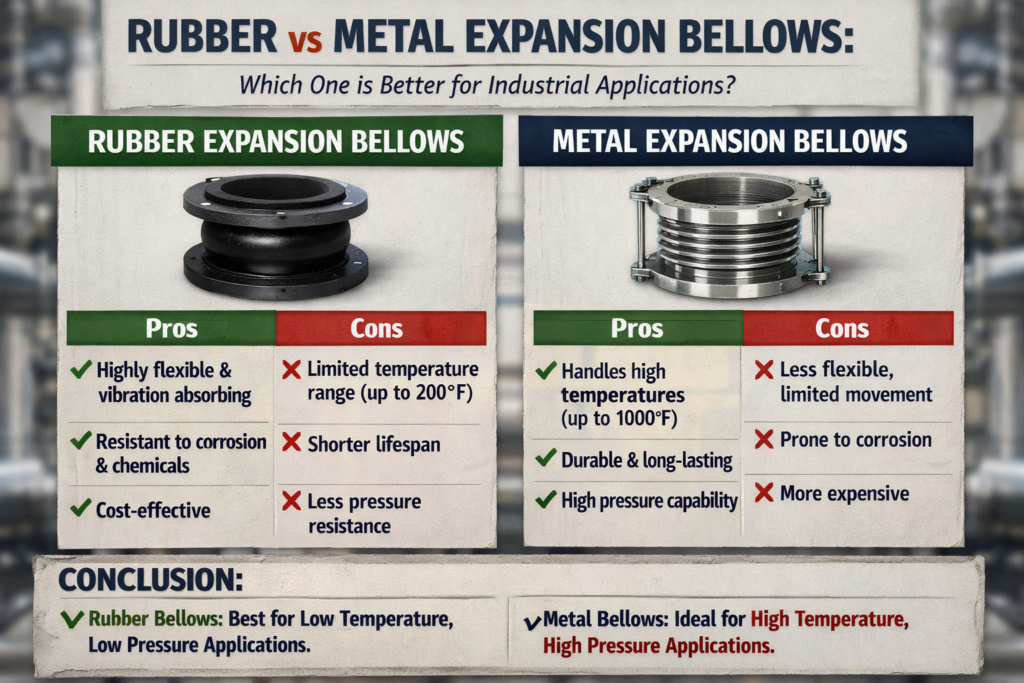
There are several types of expansion bellows that are used depending on system requirements, temperature range, and operating environment.
Metal expansion bellows are made from stainless steel or alloy steel. They are mostly used in high-temperature and high-pressure environments.
Fabrication companies that provide steel fabrication services and industrial piping fabrication, such as ASEFS India, are the common suppliers of metal bellows for industrial applications.
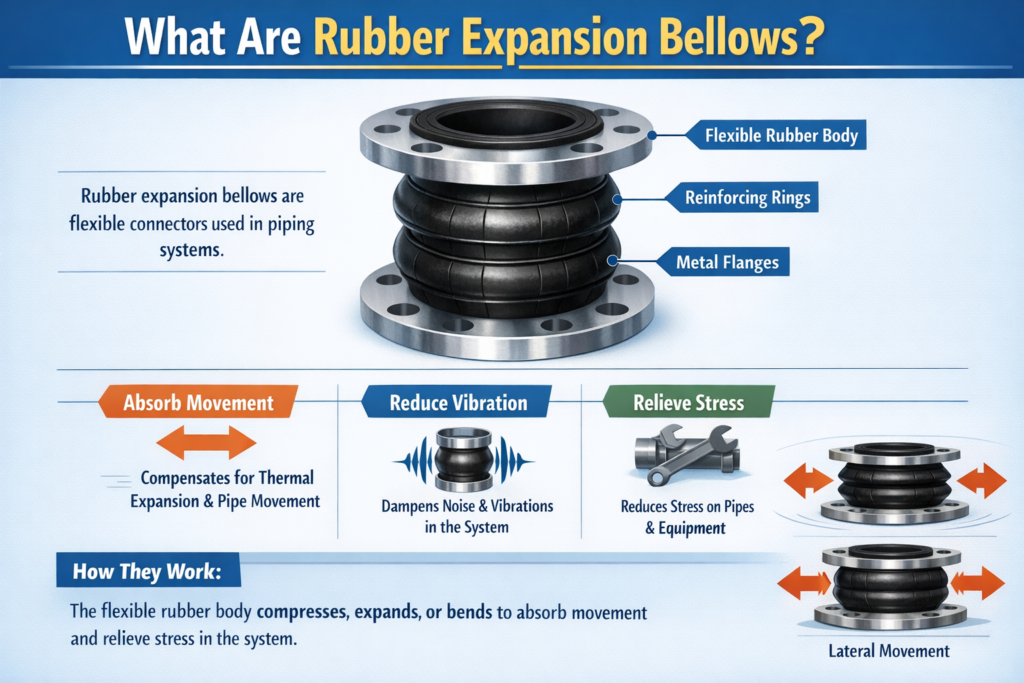
Rubber expansion bellows are flexible expansion joints made from an elastomer material that is reinforced with several layers of fabric. They are mostly used in vibration isolation and moderate temperature applications.
Industrial solution providers, such as ASEFS India, who offer rubber-lined tanks, industrial tank fabrication, and piping support systems, often install rubber bellows to dampen noise and vibration in mechanical systems.
Fabric bellows are used in low-pressure and high-temperature air or gas applications. They are used in exhaust systems, ductwork, and thermal plants.
Companies that offer fabrication solutions and industrial ducting fabrication, such as ASEFS India, integrate fabric bellows in thermal and power plant systems.
Expansion bellows are a type of flexible piping component that is designed to provide controlled flexibility within a piping system. Bellows are corrugated, which allows the bellows to be compressed or extended or to move laterally when force is applied in those directions.
Expansion bellows work by allowing for these movements in the pipe system to protect the equipment and piping from damage.
Industrial fabrication and piping fabrication companies, such as ASEFS India, a company that provides industrial steel fabrication, piping fabrication solutions, and engineering support services, design expansion bellows and their placement in the piping network to help increase system reliability.
An expansion bellows assembly will consist of several important components.
Industrial manufacturers such as ASEFS India, who offer steel fabrication solutions, industrial tank fabrication, and industrial piping components and fabrication, will ensure that all of the components are built to meet engineering standards and project specifications.
Expansion bellows are used in many industrial sectors that have piping systems subject to dynamic conditions.
Industrial solution companies such as ASEFS India, which provide industrial fabrication services, steel structures, piping fabrication solutions, and piping system components and accessories, support industries with engineering piping accessories and fabrication.
Expansion bellows provide the following operational benefits in industrial piping systems.
Industrial fabrication, manufacturing, and engineering companies, such as ASEFS India, which provide industrial steel fabrication, tank manufacturing, piping fabrication, and process equipment, will recommend the use of expansion bellows as an important component for safe and efficient industrial operations.
Expansion bellows require little maintenance; however, periodic inspection is needed.
Industrial service and maintenance companies such as ASEFS India, which offer industrial maintenance support, fabrication solutions, and piping system engineering support, will often support companies with the maintenance of piping infrastructure and expansion components.
Also Read:- Top Dish End Manufacturers in India: Quality, Standards & Pricing
Expansion bellows are a key component in modern industrial piping systems. Expansion bellows absorb thermal expansion, vibration, and mechanical movement in piping to prevent damage to pipelines and equipment and to ensure safe and efficient operation.
Expansion bellows are an essential engineering solution in all industries, from power plants and oil refineries to chemical processing units and water treatment facilities, to maintain system stability. Industrial infrastructure companies such as ASEFS India, which provide industrial fabrication solutions, steel structures, piping fabrication solutions, and engineering support, provide high-quality expansion bellows and other piping system components and piping support that support reliable industrial infrastructure.
Ans: Expansion bellows are used to absorb thermal expansion, vibration, and movement within piping systems to protect equipment and to maintain system stability.
Ans: Expansion bellows are commonly used in oil and gas plants, power stations, petrochemical and chemical industries, water and wastewater treatment, and HVAC systems.
Ans: Expansion bellows are made from materials like stainless steel, alloy steel, rubber, and specialized fabric materials.
Ans: The service life of expansion bellows will vary depending on the operating conditions; however, they can last for many years if properly installed with regular inspection.
Ans: Yes, many manufacturers, such as ASEFS India, can provide custom expansion bellows that are made according to project specifications and industrial requirements.
Choosing a trusted partner for fabrication is a strategic decision that impacts the success of your project. At ASEFS India, we bring over 37 years of experience, in-house expertise, and certified quality processes to every job. We don’t just build components—we build confidence.


At A.S. Engineers & Fabricators, our team excels in designing, manufacturing, and erecting steel structures that set industry benchmarks. We have established a robust presence in metal fabrication, heavy equipment, and steel structures, providing top-tier solutions for industrial plants and high-rise buildings.
+91 92267 69978
+91 89569 38780
info@asefsindia.com
2025 © A.S Engineers - All rights reserved