Forming Dish End

Forming Dish End

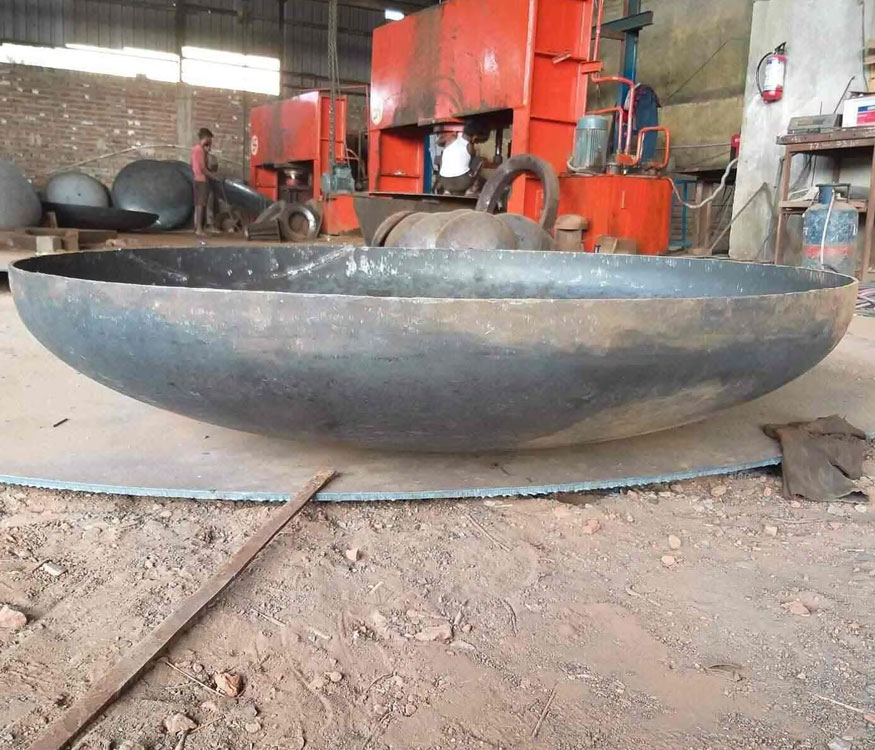
The process of forming clad dish ends is technically disciplined because the material is made of two or more metallurgically bonded layers. Clad materials are engineered by bonding a corrosion-resistant alloy, such as stainless steel, duplex, or nickel alloy, to a carbon steel base plate. The objective is to create a compound that has the strength of carbon steel and the chemical resistance of corrosion alloys.

Clad dish ends are used in pressure vessels in aggressive service conditions in chemical processing, refineries, fertilizer plants, and offshore processing. The forming process accounts for the different elongation between the clad layer and backing material to avoid stress concentration or cracking. Precision press forming and spinning techniques help achieve accurate dimensional control while preserving corrosion-resistant properties on the inner surface. With careful forming, clad dish ends provide excellent structural strength, high corrosion resistance, reliable weldability, and long-term durability in pressure vessels.

Strategies for Forming Dish End

Forming clad dish ends is a technically disciplined process due to the metallurgically bonded nature of the material. This construction typically involves combining a corrosion-resistant alloy layer with a carbon steel or low alloy steel base.

Industry Versatility

Clad ellipsoidal dish ends are used in pharmaceuticals, chemicals, petrochemicals, refineries, fertilizer plants, and offshore processing units, due to their corrosion resistance, high-temperature resistance, and pressure integrity. These industries require pressure-rated closures that can withstand corrosion, high temperatures, and aggressive media.

Emphasize Safety & Efficiency

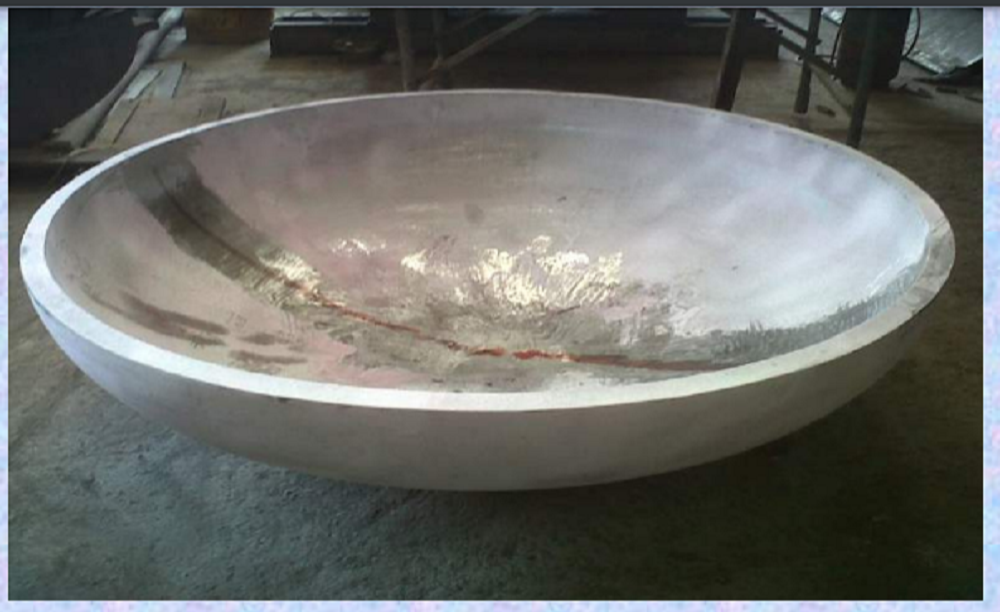
The elliptical profile of a dish end provides more uniform stress distribution on the surface. Compared to a flat head, the ellipsoidal design can better handle internal pressure. This allows designers to optimize thickness and use less material, without compromising strength. It is a cost-effective pressure boundary component that can maintain mechanical integrity under demanding operating conditions.

Precision Fabrication Advantage

Advanced hydraulic press forming and spinning techniques ensure tight dimensional tolerances. Accurate crown radius and knuckle radius support better welding alignment with cylindrical shells. Weld-ready edge preparation reduces on-site fabrication time and improves joint quality.

Advantages

our Service

Our Products Advantages

Optimized Strength

Even distribution of internal pressure reduces stress concentration and enhances structural integrity.

Cost-Efficient

Requires less material compared to hemispherical heads for comparable pressure performance.

Space-Saving

Shallower depth than hemispherical ends preserves usable internal vessel volume.

High Pressure Suitability

Designed to withstand substantial internal pressure levels in industrial service.

Smooth Welding Edge

Facilitates seamless integration with cylindrical shells, improving weld quality.

Customizable Sizes

Manufactured in various diameters, thicknesses, and clad configurations.

Superior Durability

Reliable performance under high stress, temperature variation, and corrosive exposure.

Corrosion-Resistant Options

Available with stainless steel, duplex, and nickel alloy cladding for aggressive media.

Streamlined Design

Reduces turbulence in flowing process media, supporting operational efficiency.

Improves Vessel Integrity

Enhances the overall mechanical stability of tanks and pressure vessels.

Compliant with Codes

Manufactured in accordance with internationally recognized pressure vessel standards.

Features

Key Features

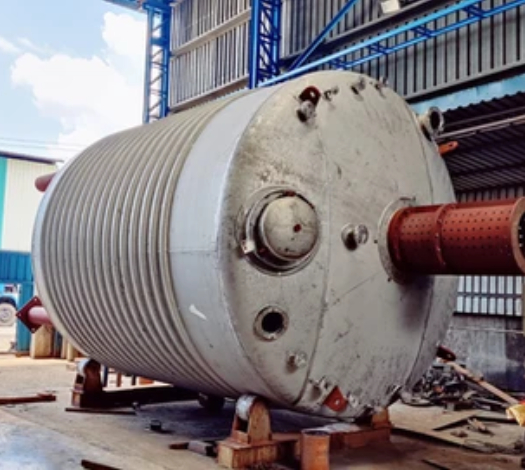
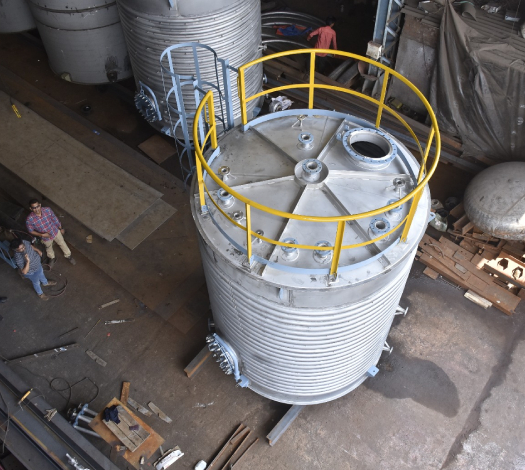
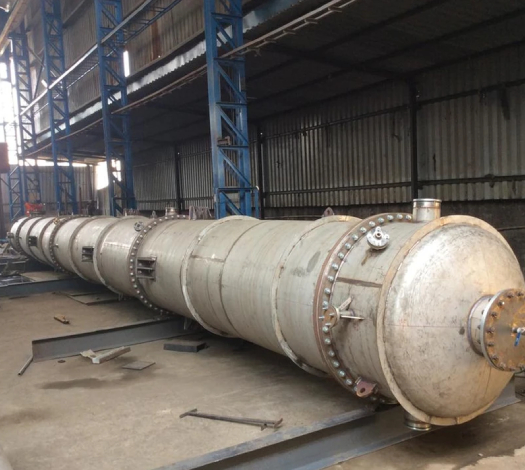
Our engineered equipment is designed for high thermal and mechanical performance across diverse industrial environments. Built using premium materials such as SS316L and carbon steel, the products ensure consistent strength and resistance to corrosion. Compact yet robust designs allow efficient integration into process systems while maintaining structural durability.

Key features include seamless fabrication, corrosion-protective finishes, customizable configurations, and low maintenance requirements. Each unit undergoes strict quality inspection and dimensional verification to ensure reliability in chemical processing, oil refining, and power generation sectors. Fully engineered for precision, safety, and extended operational life.

Related Products

Contact

Get in Touch

Let’s Build Your Vision Together Today.

FAQs

1. What is a clad dish end and why is it used in pressure vessels?

Ans: A clad dish end is a pressure vessel head made from a base material, such as carbon steel, that is metallurgically bonded with a corrosion-resistant alloy layer. It combines structural strength with chemical resistance. This design is widely used in industries where vessels are exposed to aggressive media but must remain cost-effective compared to solid alloy construction.

2. What forming challenges are involved in manufacturing clad dish ends?

Ans: The main challenge is maintaining bond integrity between the clad layer and the base metal during forming. Differential elongation, excessive thinning, or improper temperature control can lead to delamination or cracking. Controlled press forming, spinning, and proper heat management help preserve dimensional accuracy and corrosion resistance.

3. Are clad ellipsoidal dish ends compliant with international standards?

Ans: Yes. When properly engineered and fabricated, they are manufactured in accordance with globally recognized pressure vessel codes such as ASME and DIN. Compliance ensures safety, traceability, and suitability for regulated industrial applications.

4. In which industries are clad dish ends commonly used?

Ans: They are widely applied in pharmaceuticals, chemical processing, petrochemical plants, refineries, fertilizer production, offshore installations, and power generation facilities. These sectors require pressure-rated closures that offer durability, corrosion resistance, and long service life under demanding operating conditions.