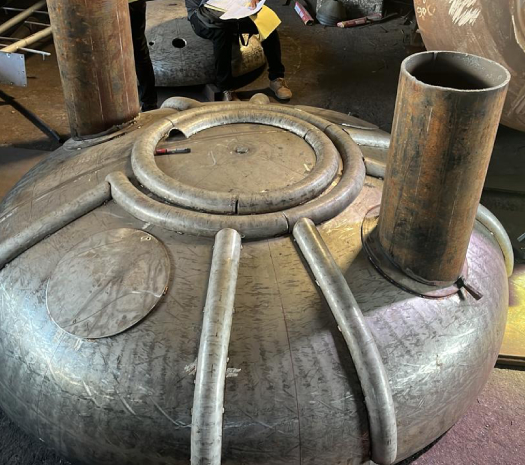
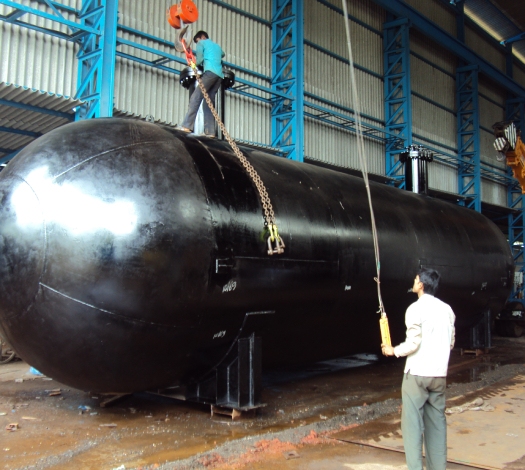
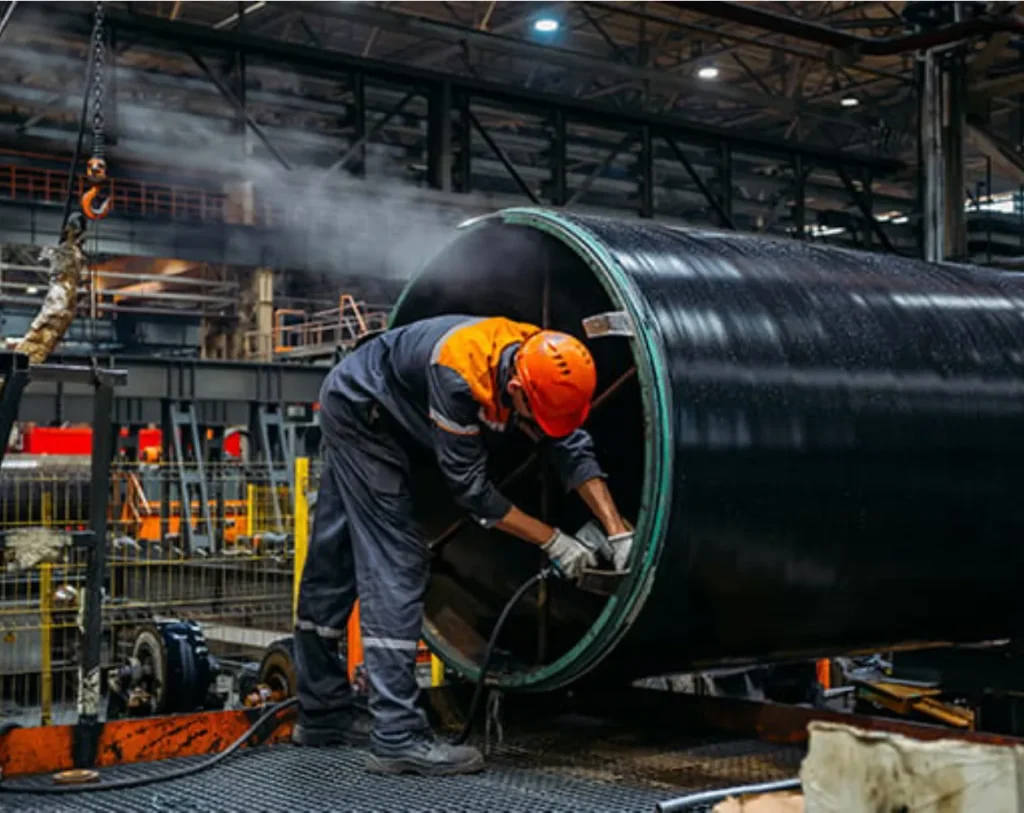
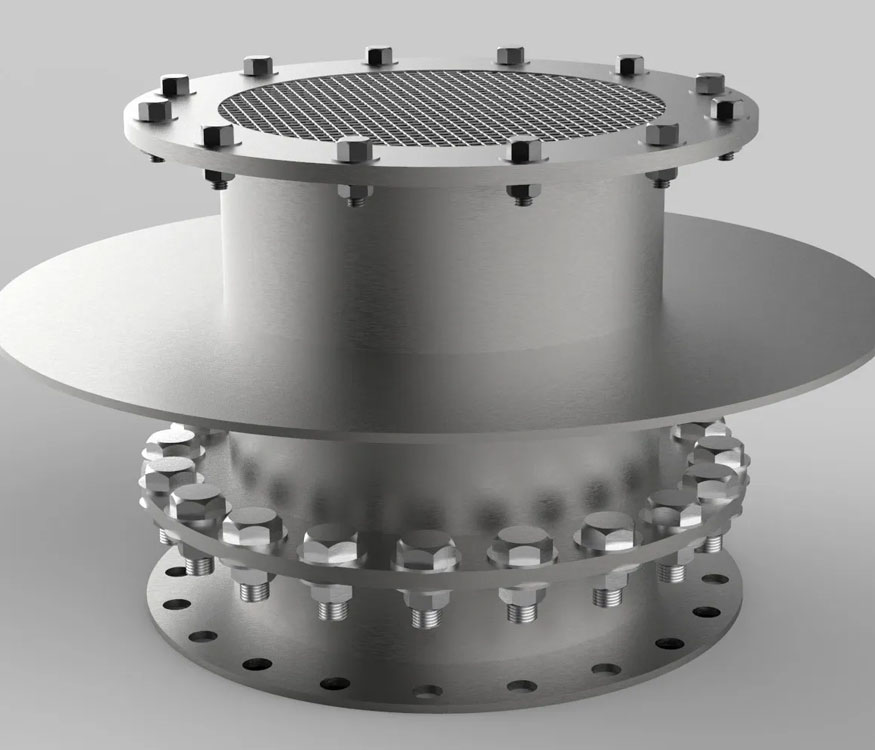
Dished ends, also known as pressure vessel heads or tank heads, are curved end closures that are used to seal cylindrical vessels, including storage tanks, pressure vessels, boilers, reactors, and other industrial containers. Dished ends are used instead of flat plates because curved shapes distribute internal pressure more effectively and reduce stress concentration.
Dished ends find extensive use in the oil and gas industry, chemical processing, power plants, water treatment, food processing, pharmaceuticals, and other industrial applications. Asefs India is a manufacturer and supplier of high-quality dish ends for various industrial applications.
Reasons for Using Dished Ends
Flat end plates are subject to high bending stress under internal pressure. This limits the allowable pressure and requires thicker material.
Dished ends offer the following advantages:
Improved pressure distribution
Higher structural strength
Reduced material thickness
Enhanced safety performance
Long service life
The curved geometry allows the internal pressure to be transferred as membrane stress rather than bending stress, which increases efficiency and reliability. Asefs India ensures precision forming to maintain optimal stress distribution.
Also Read:- Perforated Type Cable Trays: Benefits, Applications & Installation Guide
Torispherical Head (Flanged and Dished Head)
A torispherical head is the most common type of head used in industrial pressure vessels. It is also known as a flanged and dished head.
Spherical crown section
Knuckle radius that connects the crown to the flange
Straight flange for welding to the shell
Economical to manufacture
Suitable for moderate pressure
Commonly used in storage tanks and process vessels
Applications:
Chemical storage tanks
Air receivers
Process vessels
Water treatment tanks
It is widely used due to its cost-effectiveness and ease of fabrication. Asefs India supplies torispherical heads as per industry standards.
Ellipsoidal Head (2:1 Elliptical Head)
The 2:1 elliptical head is an elliptical head with an elliptical profile. The depth of the head is usually one-fourth of the vessel diameter.
Better stress distribution than torispherical heads
Suitable for higher-pressure applications
Efficient structural design
Applications:
High-pressure vessels
Boilers
Heat exchangers
Reactor vessels
Ellipsoidal heads are widely used in industries where higher design pressure and improved safety margins are required. Asefs India manufactures 2:1 elliptical heads with strict dimensional accuracy.
Hemispherical Head
A hemispherical head is in the shape of half a sphere.
Best pressure resistance
Uniform stress distribution
Strongest head design
Applications:
High-pressure gas storage vessels
Oil and gas separators
Critical pressure systems
Cryogenic vessels
Hemispherical heads are superior in strength but more expensive to fabricate due to forming complexity. Asefs India provides hemispherical heads for demanding pressure applications.
Flat Head
Flat heads are simply flat plates used as end closures.
Low fabrication cost
Simple manufacturing process
Limited pressure capability
Applications:
Low-pressure tanks
Small storage vessels
Atmospheric tanks
Flat heads are rarely used in high-pressure applications because they need to be much thicker. Asefs India also supplies flat heads for low-pressure systems.
Conical Head
Conical heads have a cone shape. They are used when a gradual transition between different diameters is needed.
Allows smooth flow transition
Suitable for hopper or discharge systems
Can handle moderate pressure
Applications:
Mixing tanks
Storage tanks with bottom discharge
Silos and hoppers
Chemical process vessels
Conical heads are especially useful when gravity discharge of material is needed. Asefs India fabricates conical heads for industrial processing systems.
Toriconical Head
A toriconical head is a combination of a conical section with a knuckle radius. The knuckle radius reduces stress concentration.
Improved stress distribution compared to plain conical heads
Suitable for higher pressure than simple conical heads
Applications:
Pressure vessels with bottom discharge
Chemical reactors
Fertilizer plants
Asefs India manufactures toriconical heads with enhanced structural reliability.
Materials Used in Dished Ends
Dished ends are made from a variety of materials depending on the application.
Carbon steel for general industrial applications
Stainless steel for corrosive environments
Duplex steel for high-strength requirements
Alloy steel for high temperature and pressure
Aluminum for lightweight requirements
The material selection is based on:
Design pressure
Operating temperature
Corrosion resistance
Industry standards
Asefs India offers dish ends in a wide range of certified materials.
Manufacturing Process
Dished ends are formed through various methods, including.
Cold forming (press forming)
Hot forming
Spinning process
After forming, they may undergo additional processes such as:
Heat treatment
Edge trimming
Non-destructive testing
Dimensional inspection
Manufacturing is done in accordance with standards like ASME, DIN, or EN codes as per project requirements. Asefs India follows recognized industry standards for manufacturing and quality control.
Applications in Various Industries
Dished ends are commonly used in the following industries.
Oil and gas pressure vessels
Chemical reactors
Boiler drums
LPG storage tanks
Water storage tanks
Food processing vessels
Pharmaceutical equipment
Dished ends are critical components in any system that involves internal pressure. Asefs India serves a wide range of industries with custom-manufactured dished ends.
Comparison of Dished End Types:
Type | Pressure Capability | Cost | Common Use
Flat Head | Low | Low | Atmospheric tanks
Torispherical | Moderate | Moderate | Storage vessels
Ellipsoidal | High | Higher | Boilers, reactors
Hemispherical | Very High | Highest | Gas storage
Conical | Moderate | Moderate | Discharge systems
The selection of the appropriate dish end type depends on factors such as pressure rating, budget, and specific process requirements. Asefs India guides clients in selecting the right dish end type.
Conclusion
Dished ends are crucial components used in pressure vessels, storage tanks, and other industrial containers. The curved shape of dished ends improves strength, reduces stress concentration, and enhances overall safety during operation. The most commonly used types of dished ends are torispherical, ellipsoidal, hemispherical, and conical heads, each with its own advantages and specific applications. Asefs India is a reliable supplier and manufacturer of dish ends for various industrial applications.
Also Read:- Rubber Lining of Tanks: Process, Advantages & Industrial Applications
FAQs
- Which type of dish end is the strongest?
Ans: The hemispherical head offers the best pressure resistance due to its uniform stress distribution.
- Why are ellipsoidal heads commonly used?
Ans: They provide a balance between strength and manufacturing cost, making them suitable for high-pressure vessels.
- Can flat heads be used in pressure vessels?
Ans: Flat heads are only suitable for low-pressure applications. High-pressure systems need curved heads.
- How is the thickness of dished ends calculated?
Ans: Thickness is determined based on design pressure, diameter, material strength, and applicable design codes.
- What standards govern the manufacturing of dished ends?
Ans: Common standards include ASME Section VIII, DIN standards, and EN pressure vessel codes.