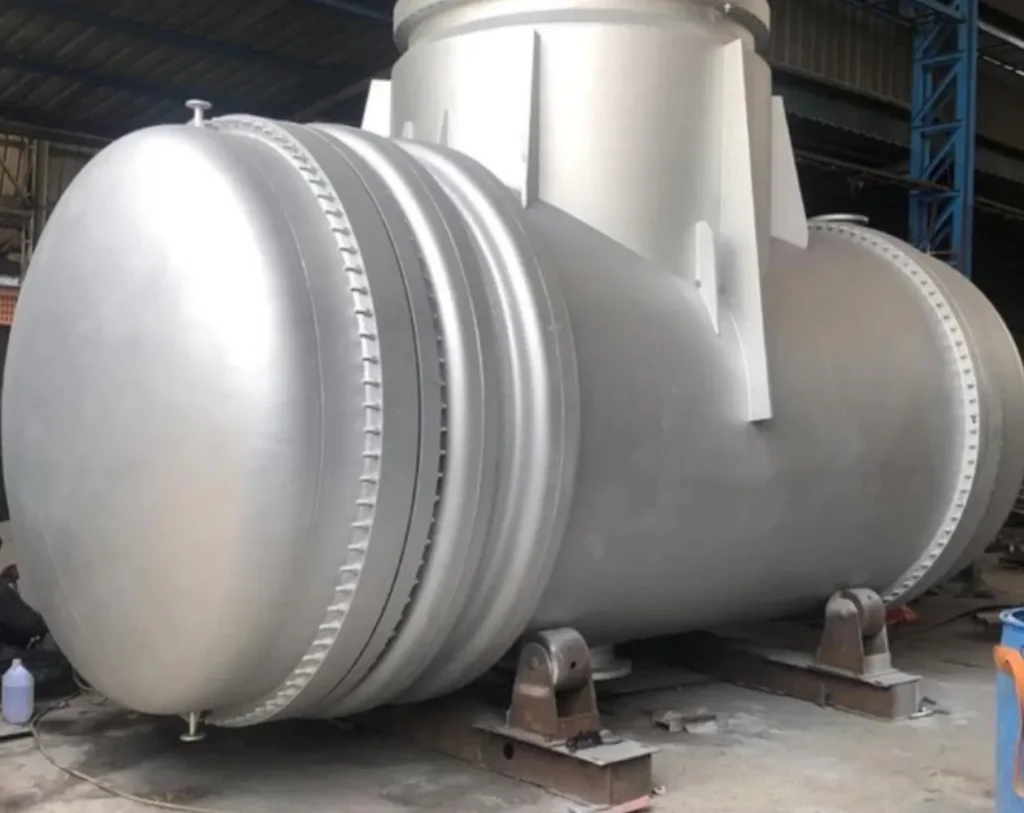
Pressure vessels serve as the backbone of many industrial operations, holding gases and liquids at pressures far different from atmospheric levels. These containers play a role in chemical processing, oil refining, power generation, and pharmaceutical manufacturing. When a pressure vessel fails, the consequences can be severe: catastrophic ruptures, toxic leaks, fires, explosions, and loss of life.
Understanding what causes these failures and knowing how to prevent them can save lives, protect assets, and keep operations running smoothly. This guide walks you through the most common failure modes, their root causes, and proven strategies to maintain vessel integrity over the long term.
Pressure vessel failures stem from multiple factors, including material defects like cracks or corrosion that weaken structural integrity, over-pressurization where internal pressure exceeds design limits, improper maintenance, manufacturing flaws, design errors, physical damage, and extreme environmental conditions.
Here is why each failure type matters.
Material defects can exist from the manufacturing stage or develop during service. Corrosion weakens structural integrity by gradually degrading the material, leading to wall thinning and eventual rupture, accelerated by harsh chemicals, high humidity, and temperature fluctuations. Manufacturers like ASEFS India understand that selecting high-grade stainless steel and carbon steel is just the first step in preventing material-related failures.
Weld defects pose another serious concern. Crack initiation often occurs in weld metal and heat affected zones due to inadequate reinforcement design and poor welding execution. Hard inclusions, gas blisters, and micro-cracks can develop during rapid cooling of welded joints, creating weak points that propagate over time.
Over-pressurization occurs when internal pressure exceeds the vessel’s design limit, potentially causing rupture. This can happen due to malfunctioning pressure relief valves, operator error, or process upsets. Safety devices must be regularly inspected to ensure they activate when needed.
Different corrosion types attack pressure vessels in different ways. Corrosion mechanisms include chemical corrosion and electrochemical corrosion, manifesting as uniform corrosion, pitting corrosion, intergranular corrosion, stress corrosion, crevice corrosion, hydrogen corrosion, and bimetallic corrosion. Each type reduces material strength and load-bearing capacity.
External corrosion can be just as damaging as internal corrosion, particularly in vessels exposed to weather or corrosive atmospheres. Corrosion under insulation (CUI) presents a hidden threat that develops where moisture gets trapped between the vessel surface and its insulation layer.
Rapid temperature fluctuations subject vessels to thermal stress, causing materials to expand and contract unevenly, generating high stresses that lead to cracks and eventual failure. Process equipment operating in high-temperature applications faces another challenge: creep. Creep causes gradual material deformation under prolonged stress at elevated temperatures, weakening structure over time.
In specific scenarios, hydrogen exposure compromises metal integrity, making it brittle and prone to sudden failure, often occurring during chemical processes involving hydrogen. This failure mode can be particularly dangerous because it happens with little warning.
Vessels subjected to repeated pressure cycles, vibrations, or thermal cycles accumulate damage over time. Fatigue results from repeated stress cycles, causing cracks that can lead to failure. Welded joints are especially vulnerable to fatigue cracking.
Design flaws significantly increase failure risk when vessels are not designed according to proper engineering standards and principles, including inadequate material selection, improper sizing, and failure to account for external forces or environmental conditions. Manufacturing defects like improper heat treatment, poor welding procedures, or dimensional inaccuracies compound these risks.
Understanding failure modes helps in developing targeted prevention strategies.
Brittle fracture occurs with no significant plastic deformation when wall stress is much less than material strength limit, caused by material embrittlement from inappropriate material selection, improper processing, strain aging, or poor operating environment. Ductile rupture happens when stress reaches or approaches the wall’s strength limit.
Erosion and corrosion cause wall thickness reduction and material structure changes or local corrosion causing pits, reducing mechanical properties until bearing capacity becomes insufficient. Environmentally assisted cracking, including stress corrosion cracking and hydrogen-induced cracking, develops slowly but can lead to sudden failure.
Progressive plastic deformation, alternating plasticity, and fatigue under various strain conditions fall into this category. Each pressure cycle or thermal cycle adds damage that accumulates until failure occurs.
Regular maintenance involves routine inspections, testing, and repairs to ensure vessel integrity, identifying potential issues like cracks, corrosion, or wear before they become severe, and ensuring safety valves and control mechanisms function correctly.
Schedule inspections based on vessel service conditions, operating environment, and regulatory requirements. High-risk vessels may need more frequent inspections than those in benign service.
Companies like ASEFS India that manufacture pressure vessels to ASME standards recognize that inspection begins during manufacturing and continues throughout the vessel’s service life. Creating detailed inspection records helps track vessel condition trends over time.
Maintain complete documentation including design specifications, material certifications, welding procedures, heat treatment records, and all inspection reports. This documentation proves valuable when assessing fitness for service or investigating anomalies.
Also Read:-Why Tundish Quality Matters in Continuous Casting Operations
Non-destructive testing plays a role in pressure vessel inspection to detect defects or weaknesses that could compromise integrity, using ultrasonic testing, radiography, and magnetic particle inspection to ensure vessels meet regulatory standards and are safe for operation.
Visual inspection involves thorough visual examination of pressure vessel surfaces by trained inspectors looking for visible signs of damage, corrosion, deformation, and other abnormalities. While basic, this technique remains crucial for detecting obvious problems.
Inspectors may use mirrors, borescopes, and lighting equipment to examine internal surfaces without disassembly. Remote visual inspection using cameras allows examination of hard-to-reach areas.
Ultrasonic testing utilizes high-frequency sound waves transmitted into vessel material and reflected back to a receiver, with returned signals analyzed to detect defects like cracks, inclusions, and wall thickness variations. This method excels at finding internal flaws invisible to the eye.
Automated ultrasonic testing provides higher speed and resolution for large vessels, generating detailed maps of wall thickness and potential defect locations.
Radiography uses X-rays or gamma rays to create images of objects, passing through materials to capture internal defects like voids, scratches, dents, and other thickness and quality changes. The resulting images provide permanent records of vessel condition.
Digital radiography offers faster results with images appearing on computer screens within seconds rather than requiring film development.
Magnetic particle testing works only for ferromagnetic materials like steel and is portable, easy to carry, and inexpensive, detecting cracks responsible for surface breakage through a two-stage process. The method reveals surface and near-surface discontinuities clearly.
Fluorescent magnetic inks improve visibility under ultraviolet light, making even tiny cracks visible to inspectors.
Liquid penetrant testing involves spraying a dye on the vessel surface to detect surface flaws, with fluorescent chemicals added to make defects more visible under UV light. This technique works on both magnetic and non-magnetic materials.
A coil placed near the pressure vessel surface passes electrical current, inducing eddy currents that are hindered by defects, providing measurement of defect depth in non-magnetic materials. This method works well for heat exchanger tubes and other conductive components.
Prevention begins during fabrication. ASEFS India and other quality manufacturers implement strict protocols during construction to minimize defects.
Choose materials compatible with process fluids, operating temperatures, and pressure conditions. Consider corrosion resistance, mechanical properties at operating temperature, and toughness at the lowest expected temperature.
Follow qualified welding procedures that specify proper preheat, interpass temperature, heat input, and post-weld heat treatment. Welders must be certified for the specific procedures they perform.
Proper weld joint design, preparation, and fit-up prevent defects during welding. Backing strips and run-off tabs help ensure sound welds at joint edges.
Implement inspection checkpoints throughout fabrication. Check material certifications, verify dimensions, monitor welding parameters, and perform non-destructive testing on all welds and pressure boundaries.
Hydrostatic testing remains the standard for verifying vessel integrity before initial service. The test pressure typically exceeds the maximum allowable working pressure by a specified margin, proof-testing the vessel’s ability to safely contain pressure.
Preventing over-pressurization involves incorporating safety devices such as pressure relief valves and rupture disks that activate to release excess pressure, with regular maintenance and inspection ensuring proper function.
Size relief devices properly based on worst-case scenarios. Test them periodically to confirm they open at the correct pressure and reseat properly.
Apply protective coatings to external surfaces. Use corrosion-resistant alloys or linings for internal surfaces exposed to corrosive fluids. Install cathodic protection where appropriate.
Monitor corrosion rates through thickness measurements at designated locations. Trending data helps predict when wall thickness will reach minimum acceptable levels.
Stay within design limits for pressure, temperature, and fluid composition. Avoid rapid temperature changes that create thermal stress. Establish procedures to prevent process upsets that could cause over-pressurization.
When inspections reveal defects, evaluate them using fitness-for-service procedures. Some flaws may be acceptable for continued service while others require repair or vessel replacement. Never ignore inspection findings.
Modern sensor technology allows continuous monitoring of vessel conditions. Acoustic emission monitoring can detect crack growth in real-time. Corrosion probes provide ongoing corrosion rate data. Temperature and pressure trending helps identify abnormal conditions before they cause damage.
ASME Section VIII provides the foundation for pressure vessel design and construction in many countries. Following these codes ensures vessels have adequate strength and safety factors.
API 510 establishes requirements for in-service inspection, repair, and alteration of pressure vessels. Compliance demonstrates commitment to vessel integrity management.
Industry-specific standards may impose additional requirements. Nuclear, petrochemical, and other sectors have specialized codes addressing unique hazards.
Personnel involved in operating, maintaining, and inspecting pressure vessels need proper training. Operators must understand operating limits, recognize abnormal conditions, and respond appropriately to process upsets.
Inspection personnel require certification in the non-destructive testing methods they use. Inspectors must understand failure mechanisms, recognize significant defects, and properly document findings.
Maintenance technicians need training in proper repair techniques, welding procedures, and quality control requirements.
Technical measures alone cannot prevent all failures. Organizations must foster a culture where safety takes priority over production pressure.
Encourage reporting of near-misses and abnormal conditions without fear of punishment. Investigate incidents to identify root causes rather than assigning blame. Share lessons learned across the organization.
Empower employees to stop operations when they observe unsafe conditions. Make it clear that safety concerns will be addressed seriously.
Pressure vessel failures result from combinations of factors, with material defects, corrosion, faulty design, inadequate maintenance, over-pressurization, and thermal stress being most common causes. Major incidents throughout history have shaped modern safety practices.
Each failure investigation reveals opportunities to improve. Study incident reports from your industry to understand what went wrong elsewhere and how similar failures can be prevented in your operations.
Preventing pressure vessel failures requires vigilance, proper maintenance, competent inspection, and adherence to established standards. While the initial cost of a comprehensive integrity management program may seem high, it pales compared to the costs of a catastrophic failure.
Regular inspections using appropriate vessel inspection methods detect problems early when they are easiest to fix. Proper pressure vessel maintenance extends service life and protects personnel. Following fabrication safety protocols during construction creates a foundation for safe operation.
Organizations like ASEFS India demonstrate that quality manufacturing combined with proper material selection creates vessels that can serve reliably for decades when properly maintained.
The stakes are too high to cut corners. Lives, assets, and environmental protection depend on pressure vessel integrity. Make prevention a priority, invest in proper inspection and maintenance, and create a culture where safety comes first.
Also Read:-Applications of Rubber Lined Pipe Spools in Process Industries
Q: How often should pressure vessels be inspected?
Inspection frequency depends on multiple factors including vessel service, operating conditions, corrosion rates, and regulatory requirements. High-risk vessels in corrosive service may need annual inspections while vessels in mild service might be inspected every five to ten years. Risk-based inspection methodologies help optimize inspection intervals based on consequence and probability of failure.
Q: What are the most reliable pressure vessel inspection methods for detecting hidden defects?
Ultrasonic testing excels at finding internal flaws and measuring remaining wall thickness. Radiography provides permanent records of internal conditions. For surface and near-surface defects, magnetic particle testing on ferromagnetic materials and liquid penetrant testing on non-ferromagnetic materials work well. The most reliable approach uses multiple complementary techniques to thoroughly assess vessel condition.
Q: Can corroded pressure vessels be safely repaired?
Yes, corroded vessels can often be safely repaired when damage is caught early enough. Options include welded repairs, composite overwraps, and metallurgically bonded patches. The key is proper evaluation using fitness-for-service procedures to determine if repair is feasible and appropriate. Some corrosion damage may be acceptable for continued service without repair if remaining thickness exceeds minimum requirements.
Q: What qualifications should pressure vessel inspectors have?
Inspectors should be certified in relevant non-destructive testing methods by recognized certification bodies. Many jurisdictions require inspectors to be authorized by regulatory agencies. Beyond certifications, inspectors need knowledge of vessel design codes, failure mechanisms, metallurgy, and welding. Experience matters greatly – seasoned inspectors recognize subtle signs that might escape less experienced personnel.
Q: How does ASEFS India ensure pressure vessel quality during manufacturing?
ASEFS India manufactures pressure vessels using high-grade materials meeting international quality standards. Their fabrication processes include strict quality assurance protocols, proper welding procedures, and rigorous testing before delivery. By following recognized codes and standards such as ASME requirements, they create vessels designed for safe, long-term performance in demanding industrial applications.




I help Engineering Importers achieve Rapid Growth and make a Positive Market Impact. I help Client achieve their Business Goals
+91 92267 69978
+91 89569 38780
info@asefsindia.com
2025 © A.S Engineers - All rights reserved