Steel manufacturing remains one of the world’s most important industrial processes. From the skyscrapers that define city skylines to the vehicles we drive daily, steel forms the backbone of modern civilization. Behind every ton of steel produced lies a complex network of specialized equipment working in perfect synchrony. Understanding this steel manufacturing equipment is not just an academic exercise but a window into one of humanity’s most productive industrial achievements.
The global steel industry produced approximately 1.95 billion metric tons of crude steel in 2023, according to the World Steel Association. This massive output depends entirely on precision-engineered machinery operating at extreme temperatures and pressures. Each piece of steel plant machinery plays a distinct role in transforming raw materials into the versatile metal that powers modern construction and manufacturing.
The blast furnace stands as one of the most recognizable pieces of steel plant machinery in integrated steel mills. These massive structures can reach heights of 30 meters or more and operate continuously for years without shutdown. Their primary function is straightforward yet demanding: converting iron ore into molten pig iron.
Inside a blast furnace, iron ore, coke (processed coal), and limestone are loaded through the top while heated air blasts through from the bottom at temperatures exceeding 1,200°C. The chemical reactions inside reduce iron ore to liquid iron while generating tremendous heat. The molten iron, containing 4 to 5 percent carbon, collects at the bottom and is periodically tapped into torpedo cars for transport to steelmaking furnaces.
Modern blast furnaces incorporate sophisticated automation systems that monitor and adjust parameters like temperature, pressure, and material ratios in real time. These systems ensure consistent output quality while maximizing fuel efficiency. The slag produced as a byproduct has found secondary uses in construction materials, making the process more sustainable than earlier iterations.
Also Read:-Why Galvanized Iron (GI) Remains a Top Choice for Fabrication
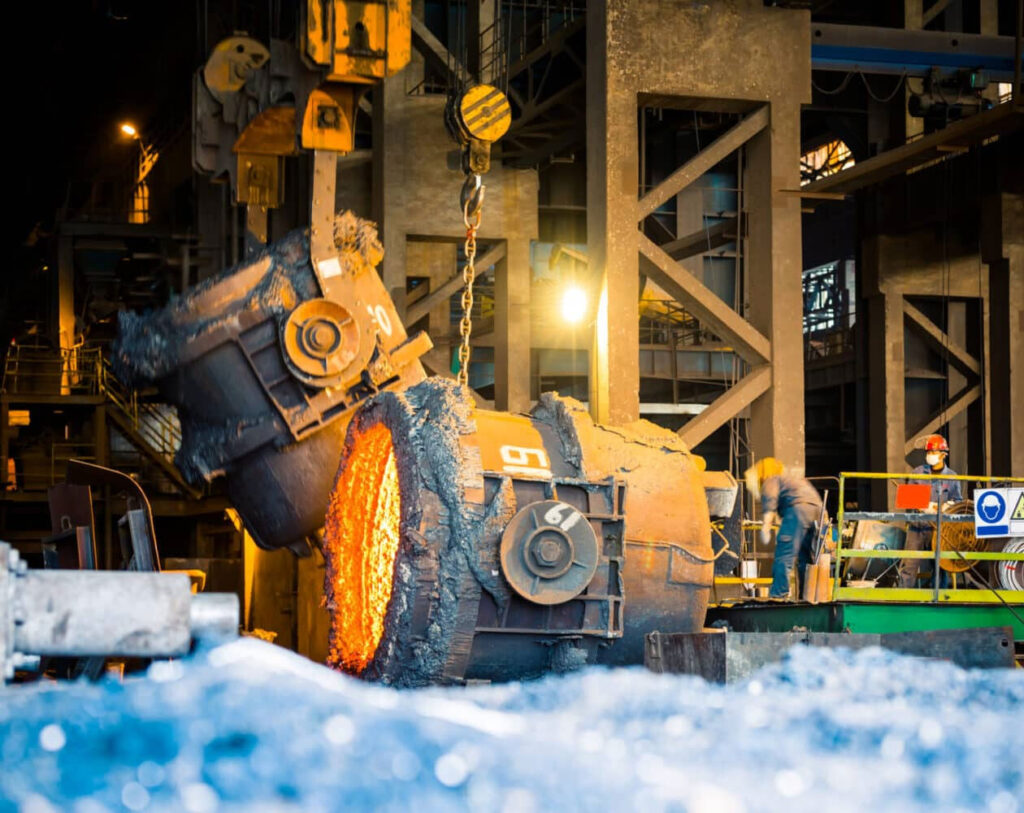
Once molten pig iron arrives from the blast furnace, the basic oxygen furnace (BOF) takes center stage. This equipment converts carbon-rich pig iron into steel by blowing pure oxygen through the molten metal. The BOF process represents one of the most efficient steelmaking methods ever developed.
A typical BOF is a large, pear-shaped vessel lined with heat-resistant refractory materials. The vessel can tilt for charging raw materials and tapping finished steel. During operation, a water-cooled lance positioned above the molten bath blows oxygen at supersonic speeds onto the surface. This oxygen reacts with carbon and other impurities, generating enough heat to melt added scrap steel without requiring external fuel.
The BOF process is remarkably fast. A modern basic oxygen furnace can convert 150 to 300 tons of molten iron into steel in just 30 to 40 minutes. This speed, combined with the process’s energy efficiency, makes BOF technology dominant in large-scale steel production. Around 70 percent of global steel production today relies on the basic oxygen method.
The refractory linings in these furnaces endure extreme thermal and chemical stress. Companies like ASEFS India specialize in fabricating the robust steel structures and refractory-lined vessels that support continuous casting and steelmaking operations. These precision-engineered components ensure furnaces operate reliably under demanding conditions.
Electric arc furnaces (EAF) represent a different approach to steelmaking that has grown dramatically in recent decades. Rather than starting with iron ore, EAFs primarily use recycled scrap steel as their raw material. This makes them central to the circular economy in steel production.
An electric arc furnace consists of a refractory-lined vessel with a retractable roof. Three large graphite electrodes extend down through the roof and create powerful electric arcs that generate temperatures up to 3,500°C. These arcs melt scrap steel and other metallic charges quickly and efficiently. The process allows for precise control over temperature and chemistry, making it ideal for producing specialty steels with specific alloy compositions.
EAF technology offers several advantages over traditional blast furnace routes. The capital investment required is significantly lower, making it accessible for smaller operations and regional markets. The furnaces can start and stop easily, allowing production to scale with demand. Most importantly, using scrap steel instead of virgin ore reduces carbon emissions by approximately 75 percent compared to traditional methods.
Today, electric arc furnaces account for about 30 percent of global steel production. In the United States, that figure exceeds 70 percent. The flexibility and environmental benefits of EAF technology continue driving its adoption worldwide.
While furnaces and casting machines draw attention, ladles and tundishes perform critical functions that directly affect steel quality. These refractory-lined vessels might seem simple, but they represent sophisticated engineering solutions to complex metallurgical challenges.
Ladles transport molten steel from furnaces to casting machines while serving as reaction vessels for secondary refining. During transport, ladles maintain steel temperature despite significant heat loss through radiation and conduction. Modern ladles incorporate stirring systems that use argon gas injection or electromagnetic fields to homogenize temperature and composition throughout the melt.
Secondary steelmaking operations in ladles include adding alloying elements, adjusting chemistry, removing impurities, and degassing. These treatments occur in ladle furnaces where electric arcs provide supplemental heating. The ability to perform metallurgical operations in the ladle allows primary furnaces to focus on melting, improving overall plant productivity.
Tundishes serve as intermediary vessels between ladles and continuous casting molds. Their primary function is maintaining a reservoir of molten steel that allows smooth operation during ladle changes. However, tundishes also play an important metallurgical role by allowing inclusions and impurities to float out before steel enters the molds.
The refractory materials in both ladles and tundishes must withstand thermal shock, chemical attack from slag and steel, and mechanical wear. Proper refractory design and maintenance directly impact production efficiency and steel quality. These components exemplify how seemingly simple equipment becomes critical when operating at steel’s extreme conditions.
After casting, steel enters rolling mills where it’s shaped into finished or semi-finished products. Rolling mills apply tremendous compressive forces through rotating cylinders to reduce thickness and create specific shapes. This process not only shapes the steel but also improves its mechanical properties through grain refinement.
Hot rolling occurs at temperatures above 1,000°C where steel remains relatively soft and malleable. Semi-finished products like slabs, blooms, or billets are reheated in furnaces and then passed through successive stands of rollers, each reducing thickness incrementally. Hot strip mills can process slabs into coils of thin sheet steel in a single continuous operation.
Cold rolling follows hot rolling for applications requiring precise dimensions and superior surface finish. Operating at room temperature, cold rolling requires more force but produces steel with tighter tolerances and improved strength. The process is essential for automotive sheet, appliance panels, and other applications where appearance and dimensional accuracy matter.
Rolling mills incorporate sophisticated control systems that monitor and adjust rolling speed, pressure, and temperature continuously. Sensors measure strip thickness, flatness, and temperature thousands of times per second. This real-time feedback enables modern mills to hold tolerances measured in microns while processing steel at speeds exceeding 20 meters per second.
Beyond the primary production equipment, steel plants depend on extensive support systems. Overhead cranes with capacities exceeding 400 tons move ladles filled with molten metal between furnaces and casting machines. These cranes operate in extreme environments where radiant heat from molten steel can damage conventional machinery.
Material handling systems transport raw materials like iron ore, coal, and limestone from storage areas to furnaces. Conveyor systems, skip hoists, and charging machines work continuously to keep furnaces fed. Any disruption in material flow can force expensive shutdowns of equipment that operates best with steady, continuous operation.
Environmental control systems capture and clean exhaust gases from furnaces. Dust collection equipment, scrubbers, and electrostatic precipitators remove particulates and pollutants before gases are released. Many plants recover heat from exhaust gases to preheat combustion air or generate steam, improving overall energy efficiency.
Water systems provide cooling for numerous applications throughout the plant. Cooling water protects furnace panels, casting molds, and equipment from thermal damage. These systems circulate millions of gallons daily and require sophisticated treatment to prevent scale buildup and corrosion.
ASEFS India provides comprehensive fabrication services for steel plant infrastructure, including structural steelwork, platforms, pipe supports, and custom industrial equipment. Their experience serving steel plants and heavy industries ensures they understand the demanding specifications these support systems require.
Modern steel manufacturing succeeds through careful integration of all these essential steel plant tools. Production scheduling must balance furnace capacities with casting machine availability while accounting for product mix requirements. Delays or problems at any stage ripple through the entire system.
Computer control systems coordinate operations across the plant. These systems track every heat of steel from charging through the final product, recording chemistry, temperature, processing steps, and quality checks. Data analytics help identify bottlenecks, optimize energy use, and predict maintenance needs before equipment failures occur.
The move toward Industry 4.0 principles brings even more connectivity. Sensors throughout the plant generate massive data streams that artificial intelligence systems analyze for patterns and anomalies. Predictive maintenance algorithms forecast component failures days or weeks in advance, allowing scheduled repairs instead of emergency shutdowns.
Steel manufacturing equipment continues evolving to meet new challenges. Environmental pressures drive development of hydrogen-based direct reduction processes that could eventually replace blast furnaces. These technologies use hydrogen instead of carbon to reduce iron ore, potentially eliminating the largest source of carbon emissions in steelmaking.
Automation advances steadily with robots taking on tasks that expose workers to heat, noise, and danger. Advanced sensors and machine vision systems monitor product quality with precision impossible for human operators. However, the scale and complexity of steel plants mean human expertise remains essential for oversight and intervention.
Digital twins create virtual replicas of entire plants where operators can test scenarios and optimize settings without risking actual production. These simulations become increasingly accurate as more operational data feeds their models. The combination of physical assets and digital optimization tools pushes efficiency to new heights.
Also Read:-What Are ASME-Certified Pressure Vessels and Why They Matter in India
The steel manufacturing equipment described here represents over a century of continuous refinement and innovation. From massive blast furnaces processing thousands of tons daily to precision-controlled continuous casters, each piece of machinery evolved to meet specific challenges in transforming iron ore and scrap into the steel modern civilization requires.
Understanding this equipment provides insight into one of humanity’s most important industrial processes. Whether you’re involved in steel production, equipment fabrication, or simply interested in how materials shape our world, recognizing the role of blast furnaces, basic oxygen furnaces, electric arc furnaces, continuous casting machines, and rolling mills helps appreciate the engineering behind every steel beam and sheet.
Companies like ASEFS India contribute to this industry by fabricating the specialized vessels, structures, and components that support steel production. As the industry continues advancing toward greater efficiency and lower emissions, the equipment performing these essential functions will evolve while remaining critical to meeting global steel demand.
Q.What is the most important equipment in a steel plant?
The answer depends on the production route, but blast furnaces and basic oxygen furnaces remain essential for integrated mills while electric arc furnaces dominate mini-mills. Continuous casting machines are universally critical as they shape molten steel into solid forms for all subsequent processing. Each piece of equipment performs an irreplaceable function, making them all important within their specific context.
Q.How do electric arc furnaces differ from blast furnaces?
Blast furnaces produce molten iron from iron ore using coke as fuel and a reducing agent, operating continuously at massive scale. Electric arc furnaces melt scrap steel using electric arcs, operating in batches with greater flexibility. EAFs have lower capital costs, smaller environmental footprints, and can start and stop as needed, making them ideal for recycling operations and regional markets.
Q.What role do ladles play in steel manufacturing?
Ladles transport molten steel between furnaces and casting machines while serving as vessels for secondary refining operations. During transport, they maintain steel temperature and protect it from air exposure. Ladles also host metallurgical treatments like alloying, stirring for homogenization, and degassing to remove hydrogen and other dissolved gases that could cause defects in finished steel products.
Q.Why is continuous casting preferred over ingot casting?
Continuous casting eliminates several steps required in traditional ingot casting, reducing energy consumption and improving yield. It produces more uniform products with fewer defects and allows faster transition from liquid steel to solid shapes ready for rolling. The process also enables better automation and quality control while occupying less space than ingot casting operations required.
Q.What maintenance challenges do steel plant operators face?
Steel manufacturing equipment operates at extreme temperatures and in corrosive environments, causing rapid wear of refractory linings, bearings, and other components. Maintenance must balance the need for repairs against the cost of production interruptions. Predictive maintenance using sensors and data analytics helps schedule work during planned outages, preventing unexpected failures while extending component life through optimized operating conditions.


I help Engineering Importers achieve Rapid Growth and make a Positive Market Impact. I help Client achieve their Business Goals
+91 92267 69978
+91 89569 38780
info@asefsindia.com
2025 © A.S Engineers - All rights reserved