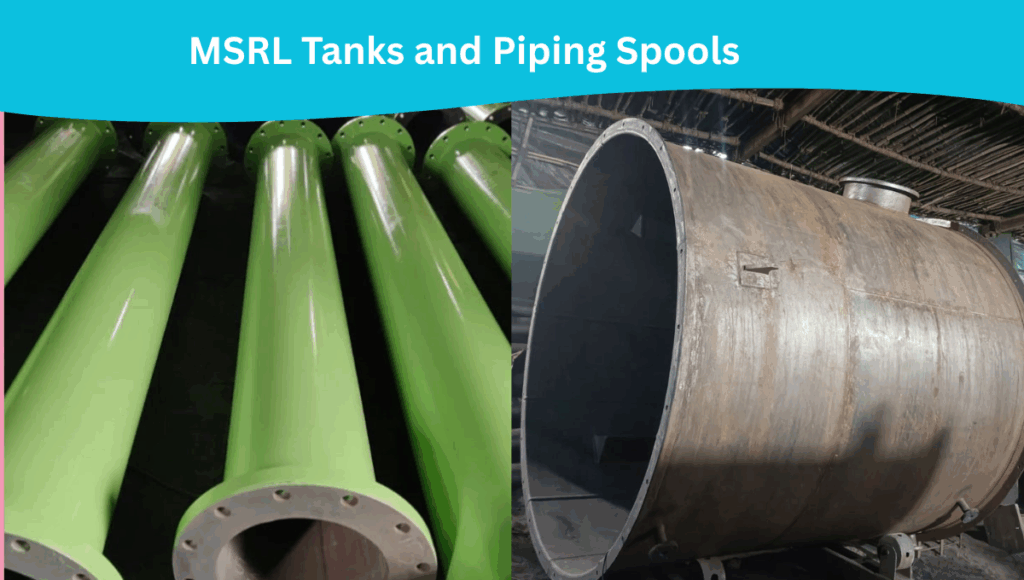
Chemical processing facilities face constant battles with corrosion. The acidic compounds, caustic solutions, and abrasive slurries flowing through tanks and piping systems can destroy unprotected steel equipment within months. That’s where MSRL (Mild Steel Rubber Lined) technology comes in, offering a practical way to combine steel’s structural strength with rubber’s chemical resistance.
An MSRL tank starts with a mild steel shell that provides the mechanical strength needed to handle pressure and support heavy loads. The interior gets lined with specially formulated rubber sheets that are vulcanized directly onto the metal surface. This process creates a bond strong enough to withstand years of service.
The rubber lining acts as a barrier between corrosive chemicals and the steel substrate. Different rubber compounds work for different applications. Natural rubber handles most inorganic acids and salts. Hard ebonite rubber, with its higher hardness rating, stands up to hydrochloric and sulfuric acid solutions commonly found in electroplating operations. Synthetic options like butyl, neoprene, and nitrile resist hydrocarbon exposure and can handle temperatures up to 90 degrees Celsius in certain conditions.
What sets quality MSRL tanks apart is the vulcanization process. During this step, rubber sheets are applied to the prepared steel surface and then cured at controlled temperatures. The heat causes chemical crosslinks to form between the rubber molecules and creates mechanical adhesion with the metal. Done correctly, this bond can last for decades without delamination.
Moving corrosive fluids from one process unit to another presents unique problems. You need piping that can handle both the chemical attack and the physical stresses of flow, pressure changes, and thermal expansion.
Rubber lined piping spools address these challenges through prefabrication. Each spool is a flanged section of pipe with rubber lining applied before installation. The prefab approach is necessary because you can’t weld steel after the rubber goes on. The heat would destroy the lining.
Here’s how it works. A carbon steel pipe section gets prepared for lining by cleaning and roughening the internal surface. Rubber sheets or extruded tubes are applied to cover the entire interior, then the assembly goes into an autoclave for vulcanization. The result is a pipe spool where the rubber bonds intimately with the steel during the curing process.
For piping systems, manufacturers typically work with line sizes of 2 inches and above. Smaller diameters make it difficult to access the interior for proper lining application. Spool lengths follow standard dimensions to allow for interchangeability and minimize the number of flange joints. Each straight spool uses a fixed flange on one end and a lap flange with stub end on the other to handle bolt hole alignment when connecting to fittings.
The rubber lining protects against chemical corrosion while the steel handles the mechanical loads. This composite structure gives you the best of both materials. Companies like ASEFS India manufacture these spools to customer specifications, selecting rubber grades based on the specific chemicals being transported and the operating conditions.
In chemical processing, equipment failure isn’t just expensive. It’s dangerous. A corroded tank or pipe can leak hazardous materials, contaminate products, or cause production shutdowns that cost thousands per hour.
Corrosion happens when chemicals react with metal surfaces. The process is continuous and accelerates over time. Iron oxide (rust) forms on carbon steel exposed to moisture and oxygen. Acids dissolve metal directly. Chlorides create pitting that penetrates deep into the material.
Standard materials like carbon steel, copper, and aluminum show high susceptibility to corrosion in chemical environments. Even stainless steels have limits. Strong oxidizing acids attack them. Chloride solutions cause stress corrosion cracking.
The corrosion resistant tank solves this by putting a non-reactive barrier between the chemical and the structural material. Rubber linings provide this protection across a wide pH range. Natural rubber resists most acids except strong oxidizers. Synthetic compounds handle specific challenges: neoprene for oils and weathering resistance, chlorobutyl and bromobutyl for concentrated acids and caustics.
Testing confirms this protection. ASTM standards provide procedures for evaluating corrosion resistance under controlled conditions. Salt spray tests, immersion tests, and electrochemical measurements all help predict how materials will perform in service. Rubber lined equipment typically shows minimal degradation even after extended exposure to harsh chemicals.
Also Read:- Lifting Brackets for Scaffolding: Types, Safety & Applications
Not every chemical process needs the same type of lining. The right choice depends on what you’re storing or transporting, at what temperature, and for how long.
Start with the chemical composition. Make a list of all compounds that will contact the lining. Include concentrations and temperatures. Some chemicals that seem similar behave very differently. Hydrochloric acid and nitric acid both sound aggressive, but they require different rubber compounds.
Temperature limits matter significantly. Natural rubber typically works up to 60 degrees Celsius. Some synthetic rubbers extend that range to 80 or 90 degrees. Push past those limits and the rubber degrades rapidly. The material softens, loses chemical resistance, and eventually fails.
Abrasion resistance becomes important when handling slurries or materials with suspended solids. Hard particles impact and scrape the lining surface during flow. Natural rubber offers good abrasion resistance. Harder compounds sacrifice some flexibility for better wear resistance in high-impact applications.
Physical configuration affects the choice too. Large storage tanks might use soft natural rubber for cost efficiency. Piping systems with elbows and fittings need rubber that can conform to complex shapes without creating weak spots. Spool dimensions influence the lining thickness and curing method.
ASEFS India works with clients to match rubber grades to specific applications. They consider the complete picture: operating conditions, maintenance access, expected service life, and budget constraints. The goal is equipment that performs reliably without requiring frequent repairs or premature replacement.
Getting MSRL equipment installed correctly makes the difference between years of reliable service and repeated problems.
Surface preparation is critical. Before lining, the steel interior must be blasted to remove mill scale, rust, and any contaminants. The surface needs a profile rough enough for mechanical bonding. Skip this step or do it poorly, and you’ll have adhesion failures.
During installation, avoid damaging the rubber. No welding on the steel after lining. Support systems use clamps and shoes rather than welded attachments. Each flanged joint needs proper gasket material compatible with both the rubber lining and the chemical being handled.
For piping, support spacing matters. Rubber lined pipe spools can’t tolerate the same unsupported spans as bare steel pipe. The weight of the fluid plus the pipe itself requires more frequent supports to prevent sagging that stresses both the lining and the flange connections.
Maintenance starts with regular inspections. Visual checks catch surface damage, blistering, or delamination early. Many operators drain and inspect tanks annually. For critical services, vacuum testing can detect pinholes before they become leaks.
When damage does occur, repairs are possible. Small areas of damaged lining can be patched using cold vulcanization methods. Larger problems might require removing sections and applying new rubber. The repair quality depends heavily on surface preparation and following proper curing procedures.
Cleaning protocols need care. High-pressure water jets can damage rubber. Mechanical scraping risks cutting through to the steel. Steam cleaning works for many applications if temperatures stay within the rubber’s limits. Chemical cleaning requires confirming the cleaning agent won’t attack the lining.
MSRL tanks and rubber lined piping spool systems see use in multiple sectors where chemical exposure is routine.
The electroplating industry relies heavily on this technology. Plating baths contain concentrated acids and alkaline solutions that would quickly destroy unprotected steel. Natural rubber and hard ebonite linings resist these chemicals while allowing the high-volume storage needed for continuous operations.
Water treatment plants use MSRL equipment for both potable water and wastewater. Chlorine solutions, used for disinfection, are particularly aggressive. Chlorobutyl and bromobutyl rubber compounds handle these oxidizing chemicals at concentrations up to several percent. The equipment life extends to 15 or 20 years with proper maintenance.
Mining operations transport abrasive slurries containing mineral particles, water, and sometimes processing chemicals. The combination of abrasion and corrosion makes this service especially demanding. Rubber lined pipe handles it better than most alternatives. The rubber absorbs impact from particles while resisting any chemical attack from dissolved minerals or added reagents.
Chemical manufacturing facilities use lined equipment throughout their processes. Storage tanks hold raw materials and intermediates. Reactor vessels contain reactions. Transfer piping moves materials between process steps. Each application gets specified based on the particular chemicals involved.
The pharmaceutical industry has specific requirements around cleanliness and contamination. Rubber linings used in pharma applications must be smooth, easy to clean, and free from materials that could leach into products. Certain rubber compounds meet these standards and provide the needed corrosion resistance.
Steel mills and metal finishing plants deal with pickling acids used to remove scale and oxides from metal surfaces. These acids are highly corrosive but must be stored and circulated in large volumes. MSRL tanks and piping handle this application effectively.
Chemical plants have several options for corrosion protection. Each has its place.
Solid plastic tanks avoid corrosion entirely. Materials like polyethylene, polypropylene, and PVC resist many chemicals. They work well for storage applications at atmospheric pressure. Limitations include lower temperature ratings, inability to handle pressure vessels, and reduced structural strength. Large plastic tanks need thick walls and extra support. MSRL tanks handle higher pressures and temperatures while providing better mechanical rigidity.
Stainless steel and exotic alloys solve corrosion problems by using inherently resistant materials. High-nickel alloys, titanium, and various specialty steels resist specific chemical attacks. The downside is cost. These materials are expensive, especially in the large quantities needed for tanks and piping systems. MSRL technology delivers similar corrosion protection at a fraction of the price.
Glass-lined equipment provides excellent chemical resistance across a broad range. The glass coating is impermeable and inert. Problems arise with thermal shock and mechanical impact. Glass can crack or chip, exposing the underlying steel to rapid corrosion. Repairs are difficult. Rubber linings offer better impact resistance and easier repairs when damage occurs.
FRP (Fiber Reinforced Plastic) construction builds entire vessels from composite materials. This approach eliminates corrosion concerns completely. FRP works well for many chemical storage applications. Manufacturing limitations make complex piping configurations more challenging. Large diameter pipes and fittings can be produced but often at higher cost than MSRL alternatives.
Coatings and thin-film linings provide some protection at low cost. Epoxy coatings, polyurea sprays, and similar products can extend equipment life. They typically don’t match the durability and chemical resistance of vulcanized rubber linings, particularly in severe service. Coatings work well for less aggressive environments or as temporary solutions.
The choice depends on your specific needs. For demanding chemical service where both corrosion resistance and mechanical strength matter, MSRL technology delivers proven performance. The cost falls between simple coatings and exotic materials while providing reliability that justifies the investment.
Also Read:- Why Tundish Quality Matters in Continuous Casting Operations
Quality matters when your equipment must contain hazardous chemicals safely for years.
Several standards guide the design and testing of corrosion resistant equipment. ASTM International publishes numerous specifications related to corrosion testing, material properties, and equipment design. These include procedures for salt spray testing, immersion testing, and electrochemical evaluation of corrosion resistance.
ISO standards provide international guidelines for corrosion testing and quality management. ISO 9227 covers salt spray tests used to evaluate protective coatings. ISO 9001 certification demonstrates a manufacturer’s quality management system meets recognized standards.
For rubber lining specifically, IS 4682 (Indian Standard) provides specifications for rubber lining of metal equipment. This covers material properties, application methods, and testing requirements. Manufacturers working to this standard must demonstrate their processes produce consistent, reliable results.
Testing procedures confirm equipment meets specifications. Wall thickness measurements verify adequate lining coverage. Adhesion tests check the bond between rubber and steel. Holiday detection using high-voltage spark testing identifies pinholes or thin spots that could lead to premature failure. Vacuum testing can find leaks not visible to the eye.
Third-party inspection adds another layer of assurance. Independent inspectors verify dimensions, materials, and workmanship meet specified requirements. For critical applications, this inspection happens at multiple stages: material receiving, during fabrication, after lining application, and before shipping.
Documentation ties everything together. Material test reports confirm rubber compound properties. Welding procedure specifications and welder qualifications prove the steel fabrication meets codes. Dimensional reports verify equipment matches design drawings. Test certificates document that inspections were performed and equipment passed.
Working with an established manufacturer makes a difference. Companies like ASEFS India maintain quality systems that control every aspect of production. They source materials from qualified suppliers, follow documented procedures, train their workforce, and keep records that demonstrate compliance. This systematic approach reduces the risk of defects and provides confidence that equipment will perform as expected.
Q.What is an MSRL tank and how does it differ from a regular steel tank?
An MSRL (Mild Steel Rubber Lined) tank combines a carbon steel shell with an interior rubber lining vulcanized directly to the metal surface. The steel provides structural strength while the rubber creates a barrier against corrosive chemicals. Regular steel tanks corrode rapidly when exposed to acids, caustics, or aggressive solutions, requiring frequent repairs or replacement. MSRL tanks resist these same chemicals for years without degradation.
Q.Can rubber lined piping spools handle high-pressure applications?
Yes, rubber lined piping spool systems can handle pressure applications because the carbon steel component carries the mechanical load. The rubber lining provides chemical resistance but doesn’t contribute structural strength. Design calculations follow standard piping codes with the steel wall thickness determined by pressure, temperature, and fluid properties. Typical applications range from atmospheric pressure to several hundred PSI depending on pipe size and wall thickness.
Q.How long does a corrosion resistant tank with rubber lining typically last?
Service life depends on the chemicals being stored, operating temperature, and maintenance practices. In typical chemical plant service, properly specified and maintained MSRL tanks last 15 to 20 years or longer. Some installations exceed 25 years when conditions remain within the rubber’s resistance capabilities. Regular inspections and prompt repair of any damage extend equipment life. Harsh conditions or poor maintenance can shorten this considerably.
Q.What types of chemicals can MSRL equipment handle safely?
Natural rubber linings resist most inorganic acids (except strong oxidizers), salts, alcohols, and hydrochloric acid. Hard ebonite provides higher chemical resistance for electroplating and metal finishing applications. Synthetic rubbers like chlorobutyl and bromobutyl handle concentrated acids, caustics, and some oxidizing chemicals up to 260 degrees Fahrenheit. Neoprene resists oils, weathering, and many chemicals. The specific compound gets selected based on your exact chemicals, concentrations, and temperatures.
Q.Are ASEFS India MSRL products certified to international quality standards?
ASEFS India manufactures MSRL tanks, vessels, and rubber lined piping components following established quality protocols and industry standards. Their rubber lining work references IS 4682 specifications for lining application. The company provides documentation including material test reports, dimensional verification, and quality inspection records for their products. Customers should verify current certifications and discuss specific standard requirements during the engineering phase of their project.



At A.S. Engineers & Fabricators, our team excels in designing, manufacturing, and erecting steel structures that set industry benchmarks. We have established a robust presence in metal fabrication, heavy equipment, and steel structures, providing top-tier solutions for industrial plants and high-rise buildings.
+91 92267 69978
+91 89569 38780
info@asefsindia.com
2025 © A.S Engineers - All rights reserved